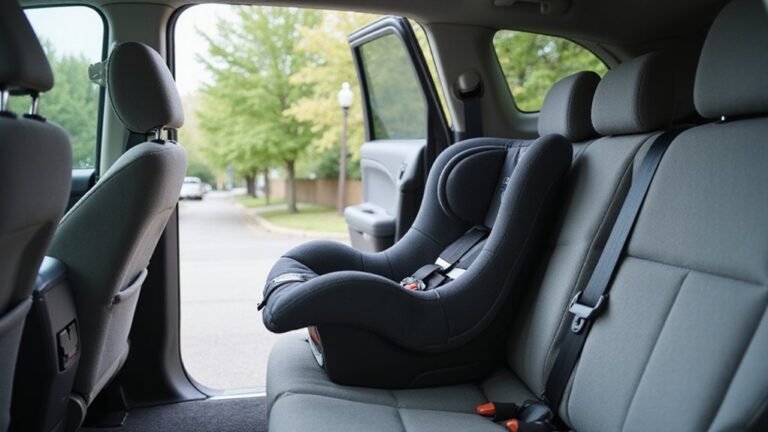


Wondering when to move your child from an infant car seat to a convertible one? It’s about more than just age—it’s mainly based on your child’s size.
Typically, you’ll switch when their head gets within an inch of the top of the seat or they reach the seat’s height or weight limit, often around 30 inches or 25 pounds. Keep them rear-facing after switching for safety’s sake.
Read on for all the details on timing and choosing the best seat for your kid.
4 Signs Your Infant Seat Is Outgrown
Your infant seat is outgrown when your child reaches the maximum height or weight limits specified by the manufacturer. Check the label or manual regularly, as exceeding these limits compromises safety. Also, if you notice less than one inch of space between your child’s head and the top of the seat when buckled, it’s time to upgrade. The harness is another key indicator: straps should sit at or below the shoulders when rear-facing. If the harness no longer fits properly, it can’t keep your child secure. Finally, if your child appears cramped or uncomfortable inside the seat, it’s a clear sign they’ve outgrown it. Don’t ignore these physical cues; they mean it’s time to transition to a larger, more appropriate seat. For a perfect fit in a larger seat, compare reviews of top options, such as the leading rotating infant car seats that offer added convenience. According to expert guidance, waiting too long to switch can compromise crash protection for your growing child.
Why Height: Not Age: Determines When to Switch
Height, not age, determines when to switch out of the infant seat. You should keep your child rear-facing until they reach the seat’s maximum height or weight limit, not based on a fixed birthday. Car seats are tested and fit to specific manufacturer specifications, so following those guidelines is safest. Typically, children outgrow rear-facing seats by height before they do by weight, especially if their torso surpasses the shell’s space. Instead of relying solely on age charts, regularly check your child’s head position. The safest rule is that your child’s head must stay at least one inch below the top edge of the shell to ensure proper protection. This also helps keep your child comfortable and ensures the seat performs as intended. While it might be tempting to switch seats early for aesthetic reasons, always prioritize the seat’s limits over the calendar to keep your child safe. Rear-facing seats protect a child’s fragile spine and neck by distributing crash forces across the back of the seat rather than pulling forward on the head. Additionally, transitioning to a booster seat too early can compromise safety because the vehicle’s lap and shoulder belt must fit correctly across the child’s body. Just as with car seats, insurance coverage for essential baby gear like breast pumps can vary by policy, so it is wise to check your specific plan for details.
The 1-Inch Rule: The #1 Indicator to Watch
The 1-inch rule is your clear indicator for when your child has outgrown their infant seat. To check, ensure the top of your child’s head remains at least one inch below the top of the shell. Once that inch of space diminishes, it’s time to transition to a convertible seat. Do not rely on leg positioning as a cue; headroom is what truly matters for safety. You can estimate remaining space by placing a 1-inch-thick object on their head—if it fits comfortably between the top of their head and the shell, they’re still good. Remember, regular seat inspections for proper fit are part of basic car seat maintenance. Always verify the fit with your manual and consider your regional regulations, as some areas enforce stricter height limits. Keep in mind that height is often the limiting factor before weight, so monitor shell space instead of just weight. Once the inch of headroom disappears, it’s time to switch to a convertible seat to keep your child safe and comfortable. For reliable storage of essential safety items like user manuals and registration documents, consider a high-quality chest of drawers with multiple drawers to keep your gear organized. For parents concerned about maintaining milk supply while managing a busy transition, consulting reviews of the best breast pumps for low supply can provide valuable guidance on equipment that supports pumping efficiency. Likewise, prioritizing your own comfort during this phase is key, and nursing pads that offer reliable absorbency can help you feel confident throughout the day.
Standard Infant Seat Weight and Height Limits
To identify when your infant outgrows a standard seat, check the exact weight and height limits specified by the manufacturer. Most seats are rated for a maximum of 30 to 35 pounds and 30 to 32 inches tall, but some have lower limits, as low as 22 pounds. Always refer to your manual to avoid guessing. Height typically becomes the first limiting factor: once your child’s head reaches the top of the shell, it’s time to switch to a larger seat. Ensure the harness straps sit at or below the shoulders for proper fit and safety. When your child surpasses the weight limit, remove any infant inserts to maintain correct harnessing. Remember, these seats are exclusively rear-facing, so transitioning to a convertible seat can extend rear-facing use and support future booster compatibility. Never rely solely on your child’s age; always verify specific size and weight limits for your model. Unlike swings, which experts advise against for unsupervised newborn sleep due to suffocation risks from improper positioning, a convertible car seat is designed for safer extended rear-facing use in a vehicle. For ongoing care of feeding equipment, refer to your bottle warmer manual for cleaning instructions to maintain proper function. When measuring your child’s height, check that the top of their head is still below the chair rail height to ensure proper head clearance.
Keep Rear-Facing After Switching: What You Need to Know
Keeping your child rear-facing after switching to a convertible seat is crucial for safety. Child safety guidelines from NHTSA and the AAP confirm that rear-facing remains the safest position for your child’s head, neck, and spine. When installing the seat, you should still position it rear-facing—switching seat types does not mean flipping the direction. Convertible seats allow you to extend this protection because they typically support rear-facing weights of 40 to 50 pounds or more. This setup continues to distribute crash forces across the seat’s back instead of your child’s fragile body. Follow the same care principles as with baby gear like a bottle warmer, where regular cleaning ensures long-lasting, safe performance. Using a tether when forward-facing is also a critical step for older children in a convertible car seat.
Avoid switching to forward-facing prematurely when you change seats. Instead, check your manual for the maximum rear-facing weight and height limits specified by the manufacturer. These limits, not your child’s age, determine how long your child can stay rear-facing. Following these guidelines gives you more room to practice the safest option: keeping your child rear-facing as long as possible.
How Long to Stay Rear-Facing in a Convertible Seat?
You should keep your child rear-facing in a convertible seat until they surpass the seat’s height or weight limits, not until a certain age. Most convertible seats have maximums ranging from 30 to 50 pounds, and it’s essential to follow these labels carefully. Safety regulations recommend keeping your child rear-facing until they exceed those limits, which often means well past age 2 and sometimes up to age 4 with higher-capacity seats. Don’t rush to switch based solely on age or legroom, as rear-facing offers the best protection in a crash. For travel, a portable bassinet can also provide a safe sleep space for your newborn when away from the car. Check your seat’s manual for the 1-inch rule: if your child’s head gets too close to the top of the seat, they’ve outgrown it. Keep them rear-facing until they reach that limit. This approach ensures maximum safety and comfort for your child during car rides. Convertible seats are designed to last for years, making them a more cost-effective choice than a shorter-lived infant seat over your child’s full car-seat timeline.
3 Practical Reasons Families Switch Early
Many families switch their child’s car seat earlier for practical reasons unrelated to safety limits. One key reason is that you might outgrow an infant seat around 9 to 12 months, based on its weight or height limits. Most infant seats have a weight limit of 22 to 30 pounds, or a shell height that’s just about 1 inch above your child’s head, prompting a switch once reached—that is not tied to your child’s age but to these physical limits. Keep in mind that two-hour cumulative limits also apply to time spent in the seat for safe breathing and development. It is important to check the expiration date molded into the plastic base, as infant seats degrade over time and lose their protective integrity. For families with twins, switching to a convertible seat can also improve compatibility with double infant strollers that are designed for older infants.
Another factor is that switching simplifies your daily routines. Convertible car seats stay installed in your vehicle, reducing the need to lift and install a heavy seat repeatedly. This makes errands, drop-offs, and pickups more manageable and less physically demanding.
Finally, travel convenience plays a significant role. Switching to a convertible seat allows you to avoid carrying a separate infant seat along with a stroller, streamlining quick trips and reducing how much gear you need to manage. Early switching helps reshape your daily logistics, making life easier beyond just following safety guidelines.
Convertible Seat Buying Checklist: 5 Critical Checks
Ensure the seat fits your child’s height and weight before purchasing. Check that it supports both rear-facing and forward-facing positions, with shoulder straps at or below shoulders when rear-facing, and above shoulders when forward-facing. A no-rethread harness makes it easier to adjust as your child grows. Confirm the fit by measuring your child and comparing it to the seat’s weight and height limits.
Additionally, verify that the seat is suitable for your vehicle’s backseat geometry. Look for accessible LATCH anchors and ensure the seat can be installed securely—ideally, it shouldn’t move more than an inch at the belt path. Check for a top tether when in forward-facing mode, as it adds extra stability and safety. For reference, pack ‘n play age limits are typically lower than convertible seat weight limits, so these products serve different purposes.
Safety features matter: choose a seat with side-impact protection and a 5-point harness system. Extra features such as a load leg can provide additional stability. Always buy new to ensure safety, check the expiration date printed on the seat, and find a balance between price and ease of daily use to make your decision smarter.
Which Convertible Seats Offer the Highest Rear-Facing Limits?
Several convertible car seats offer the highest rear-facing weight limits, with 50 pounds being the top tier. Models like the Graco Extend2Fit, Clek Foonf, and Britax One4Life stand out for accommodating children up to this weight while rear-facing. The Baby Jogger City Turn and Evenflo Revolve360 Extend also reach the 50-pound mark. Keep in mind that weight limits are not the only factor; height restrictions typically cap rear-facing at around 49 inches or are governed by head-position rules. For optimal comfort during extended rear-facing periods, look for adjustable headrests that grow with your child and ample seat padding to ensure a cozy ride. Always verify your child’s height against the seat’s shell, as reaching either the weight or height maximum will determine when to transition to forward-facing.