

Many parents wonder how long it’s safe for a newborn to stay in a swing. The good news is that keeping sessions brief—about 15 to 30 minutes at a time—is key to safety.
Overdoing it can lead to risks like restricted movement or breathing issues.
In this article, you’ll learn how to use swings safely and what to watch for to protect your baby’s well-being.
How Long Can a Newborn Stay in a Swing?
A newborn should not be in a swing for more than 15 to 30 minutes at a time. These short sessions ensure your baby stays safe and comfortable while they enjoy gentle motion. Prolonged swinging can pose risks such as overheating, restricted movement, or developmental delays. As your baby reaches developmental milestones like sitting independently, it’s important to gradually limit swing use. For feeding breaks, consider using a stable chair or a feeding pillow instead of the swing to promote proper posture and reduce continuous time in the device. For long car rides, it is also wise to check car seat cover reviews to ensure a perfect fit and comfort. By sticking to these time limits, you help ensure each session remains safe and effective as a soothing tool. For a stable alternative during diaper changes, a custom changing table often uses solid wood materials to support safe, ergonomic use.
Why a Newborn Shouldn’t Stay in a Swing Too Long
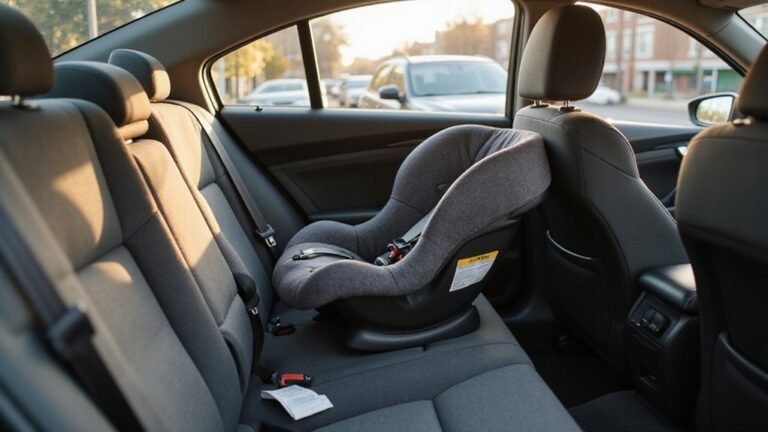
Leaving a newborn in a swing for too long poses serious safety risks. Airway obstruction is a primary concern; the semi-reclined position can cause your baby’s chin to drop toward their chest, narrowing their airway. Since newborns have weak neck muscles, they cannot self-correct this position, increasing the chance of airway blockage. Positional asphyxiation can occur quietly without obvious signs of distress, making it difficult to notice until it’s too late. Swings are not safe sleep spaces, yet babies often drift off in them, which raises the risk of sudden infant death syndrome (SIDS). For parents who also pump, choosing a supportive pumping bra can help ensure comfort during feeding sessions. In contrast, a rear-facing car seat is a safer option for travel because it reduces crash forces on a baby’s vulnerable head and spine. Also, unlike crib mattress pads, swings lack the firm and flat surface that experts recommend for reducing suffocation risks during sleep.
Developmentally, extended swing time can prevent healthy head shape from forming, leading to flat head syndrome. It also limits natural movements like kicking, twisting, and stretching—that your baby needs to develop motor skills. Excessive time in a swing reduces sensory interaction and passive containment, delaying milestones such as rolling over, sitting up, and crawling. To keep your baby safe and support their growth, supervise their time in the swing and limit sessions to no more than 15 to 30 minutes.
Best Position for a Newborn in a Swing
The safest position for your newborn in a swing is the most reclined setting available. This position helps keep your baby’s spine and airways properly aligned, reducing the risk of their chin dropping to their chest. Without firm support for the neck, your newborn’s head can slump forward, which may compress the airway. The headrest should securely cradle their head and neck, ensuring everything stays aligned with the torso. Their body should sit deeply in the seat, with the back flat against the recline and the pelvis at the base. Proper harness adjustment provides distribution of weight across the back and chest similar to top-rated booster seats for older children. For a similar level of structural support, look for a swing that offers multiple adjustable recline angles to accommodate different newborn positions. A firm, flat surface, such as a crib mattress size, is always the safest sleep environment for a newborn.
Adjust the harness so it is snug without slack, and position the chest clip at armpit level. This setup distributes weight evenly across the back rather than the neck, preventing the baby from sliding forward. Always supervise your newborn and make sure their posture remains correct to ensure their safety during use.
Why Swings Are Not Safe for Sleep
Swings are not safe for sleep because they do not meet any safe-sleep standards. Their design includes soft padding, contoured fabric, and an incline, which allow your baby to slump forward or sideways, risking positional asphyxia. Since a newborn’s head is heavy and neck muscles are weak, they cannot keep their airway open in a semi-upright seat. The American Academy of Pediatrics mandates a firm, flat surface for safe sleep, which swings do not provide.
While the harness may prevent falls, it does not prevent airway collapse or rebreathing of carbon dioxide. As your baby moves, their face can come into contact with padding, increasing the risk of suffocation or strangulation. A study by the AAP over a decade linked swings to 348 infant deaths. Because of this, it is safest to use the swing only when your baby is awake and supervised, and never for sleeping.
What to Do If Your Baby Falls Asleep in the Swing
Breathing concerns can develop when a newborn’s head tips forward in a swing, risking positional asphyxiation. Observe for noisy breathing, bluish or pale skin, or sudden changes in color. If your baby briefly wakes during transfer, wait 30–60 seconds before gently resettling them with dim lights or white noise—never place them back into the swing. Always supervise your infant until they are on a safe, flat surface. Keep in mind that babies under four months are particularly vulnerable due to their weak neck muscles. For safer sleep, choose a Graco crib mattress with a firm, flat surface.
How Much Swing Time Is Safe for a Newborn Per Day?
Newborns should have no more than one hour of swing time per day, divided into one or two short sessions. Each session should last no longer than 10–15 minutes, and never exceed 20–30 minutes. Limiting swing time helps prevent positional breathing issues, flat spots, and poor head positioning while supporting your baby’s developing muscles and airways. Before starting swing sessions, consider timing guidance based on your baby’s feeding and sleep cues to avoid overtiredness. Always supervise your newborn during these sessions, with the seat fully reclined, and keep them awake. Use the swing as a soothing tool rather than a containment device—prolonged use can increase risks. Remember, brief and supervised sessions leave plenty of time for tummy time, floor play, and parent-baby interaction, which are vital for healthy development. When selecting a swing, look for the best swing for newborn options that prioritize a fully reclined seat and safety features. For example, a swing’s lifespan and safety features can be compared to other infant products, much like how the Spectra S1 and S2 differ in their battery and cord options.
When Is It Time to Stop Using the Swing for Your Newborn?
You should stop using the swing once your baby begins sitting independently or attempting to sit up, even if they haven’t reached the weight limit. These milestones indicate that their posture support in the swing is no longer sufficient and that the risk of falling increases. Additionally, if your baby’s legs are dangling low or their head is nearing the top of the seat, it is time to retire the swing. When your baby can push up on their hands and knees, their mobility raises the risk of tipping, making the swing unsafe for continued use. Remember, developmental progress outweighs age alone. Instead, consider safe alternatives like a stationary bouncer or a floor play mat to support exploration and movement. If your baby repeatedly tries to escape or looks cramped, remove the swing immediately—its purpose has been fulfilled. Just as you would select an appropriate chair rail height for proper support and safety in a room, you must ensure the swing’s seating position is correct for your baby’s size and stage. For proper breast pumping, selecting the right flange size ensures a comfortable and effective fit, similar to how seat size matters for swing safety. Similar to ensuring a proper bottle warmer temperature prevents overheating, verifying the swing’s recline angle is correct helps keep your newborn comfortable and secure.