
Wondering when it’s safe to take your newborn outside in a stroller? The answer depends on your baby’s health, the weather, and their development.
Generally, you can start with short, mild-weather outings just a few days after birth. But it’s best to wait until your baby can sit unsupported—around six months—before moving to upright seats.
Keep reading to understand how factors like health checks and prematurity influence your timeline.
So, When Can You Actually Take a Newborn Outside?
You can generally take a healthy newborn outside for brief, controlled trips of 5 to 15 minutes in mild weather. Longer outings can increase the risk of exposure to temperature fluctuations and other environmental factors. When going out, ensure your baby is in a flat, well-supported stroller position with proper harnessing for safety. For maximum protection during car travel, your stroller should use car seat covers designed to shield your baby from direct sunlight and wind without overheating. Layer your baby’s clothing to adapt to changing temperatures, but avoid overdressing to prevent overheating. For car travel, keeping your baby rear-facing longer is a critical safety measure that significantly reduces the risk of injury in a crash.
Why Are Indoor Crowds Riskier Than Outdoor Walks?
Indoor crowds are significantly riskier than outdoor walks because enclosed spaces trap respiratory droplets, increasing the likelihood of germs reaching your baby. Poor indoor air quality means these droplets linger longer, making transmission easier. Outdoors, these same particles quickly disperse into the open air, drastically reducing the chance of infection.
Since your newborn’s immune system is still developing, crowded indoor places like malls or waiting rooms pose a greater threat. You’re less able to avoid a cough or sneeze indoors, where everyone is in close quarters. Fresh air during outdoor walks helps keep your baby safe by providing natural ventilation and space. Seasonal viruses such as RSV and flu tend to circulate more in crowded indoor environments, raising the risk further. For now, sticking to brief stroller walks in uncrowded outdoor spaces offers a much safer alternative to indoor gatherings. Regularly cleaning and descaling your baby gear, including bottle warmers, with descaling tips ensures hygiene and safety during these early months.
Do Newborns Need a Special Stroller Setup?
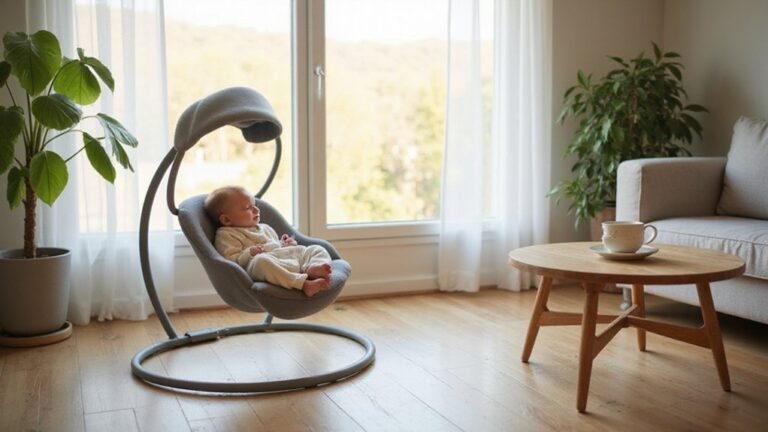
Since your newborn can’t hold their head up yet, you need a stroller setup that keeps them lying flat or nearly flat. This position helps protect their developing spine and airway. Look for models with a bassinet, carrycot, or a seat that is rated for full recline. Standard upright seats are unsafe because they can’t support your baby’s neck, risking chin-to-chest slumping, which can obstruct airflow or cause discomfort.
A five-point harness remains essential, even when the seat is fully reclined, to prevent your baby from sliding forward or falling out. Always choose a stroller with explicit newborn approval in the manual, ensuring it meets safety standards for infants. Avoid loose blankets or pillows, as these can pose suffocation risks, and only use manufacturer-approved inserts for added support and cushioning.
Alternatively, an infant car seat on a compatible frame can serve as a safe, portable option. Just make sure the seat fully supports your newborn’s head without any gaps or angles that could compromise safety or comfort. Never use a seat that doesn’t provide proper head and neck support for such a tiny, vulnerable baby.
When Can You Switch to a Regular Stroller Seat Safely?
You can switch to a regular stroller seat when your baby can sit upright with minimal assistance and maintain their head steady for several minutes. Typically, most babies reach this milestone around 6 months, but it can vary. It’s important to focus on their developmental progress rather than age alone. Your baby should be able to hold their head upright without support and sit independently or with very little help. For storage of baby essentials like spare clothes or blankets, consider a chest with multiple drawers for convenient organization.
Check your stroller manual to see the manufacturer’s recommended age or developmental stage for switching to an upright seat. Some strollers allow a transition as early as 4 months if your baby has achieved the necessary head control, while others might recommend waiting until closer to 6 months. Always ensure your baby is securely strapped in with a 5-point harness before using an upright seat to maximize safety.
How Long Should Your First Stroller Walks Really Be?
Start with short walks of about 10 to 15 minutes. This allows your baby to get used to the stroller without feeling overwhelmed. Watch for signs of discomfort, such as fussiness or leaning forward, and be ready to adjust if needed. For longer trips, choosing a car seat that is approved for aircraft can make travel much simpler. To ensure both comfort and safety, selecting a model with high quality and value can provide long-term reliability during these outings.
Make sure you follow stroller safety basics: ensure your baby lies flat and that the harness is snug. Check your outdoor gear too—bring a hat or light blanket for changing weather conditions. Just as breast milk storage bags expire and require careful attention to safety, your outdoor gear should be checked for proper fit and condition before each use.
Increase walk length gradually only when your baby shows signs of comfort, like relaxing or smiling during the stroll. Keep the pace slow, and let your baby’s cues and your energy levels guide the timing. There’s no need to stick to a strict schedule at this stage; short and simple walks are the best way to start.
How Hot or Cold Is Too Much for Newborn Stroller Walks?
Because a newborn cannot regulate body temperature like you can, you need to monitor both the heat index and wind chill carefully. For heat safety, avoid stroller walks when the heat index exceeds 90°F and limit outings to the cooler parts of the day, from 10 a.m. to 4 p.m. Stay in shade, use a fan if available, and keep outings brief when the temperature is around 85°F. Check your baby every 10–15 minutes for signs of overheating, such as flushed skin, heavy sweating, or unusual drowsiness.
For cold conditions, wind chill plays a bigger role than the air temperature alone. A day with 35°F and no wind is safer for a walk than the same temperature with a strong breeze. Keep walks short, ensure the stroller is insulated against drafts, and dress your baby in layered clothing. Watch for red cheeks or shivering, and head indoors immediately if these signs appear. For maximum protection against cold drafts, parents should also consider winter car seat covers to shield their baby from biting wind during outdoor walks.
Is It Safe to Go Out Before the First Vaccines?
Short outdoor walks in uncrowded areas are generally safe for healthy, full-term newborns from birth. Fresh air by itself doesn’t pose a risk. However, your main concern should be avoiding crowded indoor spaces and places with higher infection exposure, such as malls or public transportation. Until your baby receives their first vaccines, usually around two months old, it’s best to keep outings brief and calm. Stroller walks in quiet parks are low-risk, but larger public settings should be postponed until your baby’s immunizations have begun. Always consult your pediatrician if you have medical concerns or uncertainties about outdoor activities.
Which Health and Weather Checks Should You Run Before Each Walk?
Next, check the weather forecast. Avoid walking in temperatures above 90°F or below -15°F to stay safe. In hot weather, keep walks brief, stay in shaded areas, and ensure good ventilation. In cold conditions, dress in layers and use wind protection to retain warmth. Feel the back of the baby’s neck or chest to monitor their temperature: a sweaty neck suggests overheating, while a cool chest indicates they’re too cold. Adjust clothing one layer at a time, and if the baby remains unsettled after adjustments, it’s best to head back inside. Keep your route short and adaptable based on the weather conditions. For families with twins, selecting a double stroller with car seat can simplify safe outings by ensuring both infants are properly secured. Reviewing a trustworthy guide to top crib bedding sets can help parents prepare a safe sleep environment before bringing a newborn outside.
When Should Premature Babies Skip Outdoor Walks?
You should skip outdoor walks entirely if your preemie shows any signs of instability or if your pediatrician hasn’t approved the activity. Specifically, avoid outings if your baby has respiratory trouble, is not gaining weight properly, or remains on oxygen support. Even after discharge from the NICU, clinical stability is the key factor in determining readiness—not just leaving the hospital.
During the first three months at home, very premature babies should stay indoors unless explicitly cleared by your healthcare provider. Crowded public places pose a high risk of infection, so only undertake short, uncrowded outings once you get the green light. If your baby develops a fever, experiences breathing difficulties, or shows any signs of illness, stay inside immediately. Extreme weather conditions, poor air quality, or high ultraviolet sunlight during peak hours also mean it is best to skip outdoor walks. Remember, your preemie’s immune system needs additional time to develop, so be cautious and wait until your pediatrician advises it’s safe.