

Struggling to boost your milk supply while pumping? It can feel overwhelming trying to figure out what works best, especially with so many tips out there.
The good news is, with a consistent routine and some smart techniques, you can effectively increase your output.
In this article, you’ll learn practical strategies like optimal pumping schedules, timing, and methods to maximize milk production.
Keep reading to discover how to build a routine that fits into your life and helps meet your breastfeeding goals.
How to Fit 8–12 Pumping Sessions Into Your Day
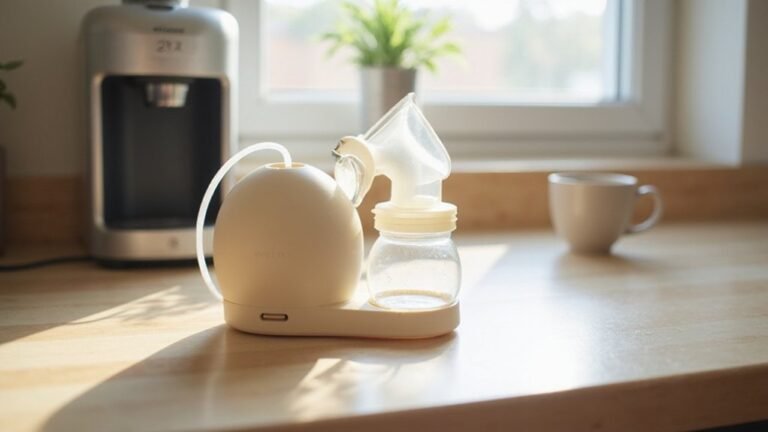
Fitting 8 to 12 pumping sessions into your day is achievable by spreading them out evenly. Aim for a session every 2 to 3 hours during the early weeks, closely mimicking a newborn’s feeding pattern to help establish your milk supply. This schedule forms your core pumping routine, whether you set fixed times like 7 am, 10 am, and 12 pm or simply pump whenever your baby eats. Each session should last around 15 to 20 minutes, totaling approximately 120 minutes daily. For the best comfort during these long sessions, you might consider a breathable material used in top-rated car seat covers, though a high-quality electric pump can significantly improve your efficiency and overall experience. Keeping your supplies organized in a multi-drawer chest helps you quickly access everything you need for each session.
For overnight pumping, avoid clustering sessions solely during the day. Instead, space them evenly through the night, ensuring at least one session occurs between 12 am and 5 am. This helps maintain your supply without creating marathon stretching gaps. Place your pump where it’s visible and convenient, and develop a quick routine to minimize missed sessions. If fitting all sessions feels daunting, start by adding just one extra session today—remember, consistency often outperforms perfection.
Why Skipping Night Pumping Stalls Your Milk Supply
Skipping overnight pumping can significantly stall your milk supply. Your body’s prolactin hormone, which promotes milk production, peaks between midnight and early morning. When you skip that pump during this window, you miss out on your most productive production period, which is especially crucial during the first 10–12 weeks postpartum. Relying only on daytime pumping ignores this critical prolactin surge, weakening the signal your body receives to produce milk consistently.
Additionally, staying full overnight without pumping encourages the buildup of Feedback Inhibitor of Lactation (FIL). This substance signals your body to slow milk synthesis when breasts remain overly full. Repeated overnight gaps can lead to a roughly 20% decrease in daily milk output for some parents by sending the message that less milk is needed. While one missed session usually won’t cause lasting harm, consistently skipping can establish a pattern of reduced demand, gradually lowering your supply. If you observe fewer wet diapers or a drop in pump volumes, it’s a sign to start including the night pump again—preferably by tapering its duration gradually instead of stopping suddenly. Just as a car seat safety guideline recommends limiting time to avoid risks, your body benefits from consistent removal during peak prolactin hours to maintain strong production signals. This concept is comparable to the rear-facing orientation for car seats, which is proven to offer maximum protection for an infant’s developing body. Using absorbent nursing pads during these overnight sessions can help manage any leakage while you maintain that critical pumping schedule.
Power Pumping: A Frequency Boost for Stubborn Supply
Power pumping involves a specific pattern designed to boost your milk supply by mimicking cluster feeding. It typically lasts for one hour: start with 20 minutes of pumping, followed by 10 minutes of rest, then another 10 minutes of pumping, another 10 minutes rest, and finally 10 more minutes of pumping. This frequent emptying signals your body to increase prolactin production, encouraging more milk to be made. For parents who also need a stroller for active outings, comparing Bob and Thule jogging strollers can help you choose a model that supports comfortable, everyday use while you focus on your pumping routine. For those planning a nursery, a mini crib may offer more versatile sleeping space than a bassinet, which can be helpful as your baby grows.
For optimal results, perform this routine daily for 5 to 7 consecutive days. Consistency is key—skipping days can weaken the demand signal and slow down your supply increase. Regular stimulation helps improve breast tissue elasticity and keeps milk flow steady. Additionally, paying attention to diaphragm tension can help you stay relaxed during sessions, further supporting milk production. Power pumping adds a powerful boost to your supply without replacing your regular milk removal schedule. To keep your equipment functioning well, regularly follow descaling and cleaning tips for your bottle warmer to prevent mineral buildup and maintain hygiene.
When to Power Pump: Morning Is the Shortcut
Power pumping most effectively happens in the morning. Your prolactin levels, which stimulate milk production, peak during early hours, so pumping then aligns with your body’s natural rhythm. The ideal window is about 30 to 60 minutes after your baby’s first morning feed. During this time, your breasts are usually fullest, providing the highest milk volume for your effort. It’s important to focus on consistency rather than clock time. Set aside a dedicated hour for your session—blocking out uninterrupted time is key. A typical power pumping schedule includes pumping for 20 minutes, resting for 10, then pumping for 10, resting for 10, and finishing with another 10-minute pump. If fitting a full hour is difficult, split the session into two 30-minute blocks. Morning power pumping is your shortcut to faster milk supply gains by working with your body’s natural surge. Choosing a supportive feeding chair can help you stay comfortable during these extended pumping sessions.
How to Use Breast Compressions During Pumping
Breast compressions can significantly increase your milk output during pumping by helping to move milk from deeper within the breast toward the nipple. To do this effectively, position your hand correctly: form a C-shape with your thumb on one side of your breast and your fingers on the opposite side, well away from the nipple and areola. Place your hand close to your chest wall for optimal control.
Use gentle, steady compressions only after your letdown reflex has started and milk flow is established. Squeeze gently when you notice the flow slowing, then release once milk resumes flowing. Maintaining a consistent rhythm is key. If milk flow stops again, move your hand to a different part of your breast and repeat. Avoid squeezing too hard, as this can cause discomfort or distort the areola inside the flange. Implementing these gentle compressions can help you fully empty your breasts and may also promote additional letdowns during the pumping session. For parents wondering about storage practices, note that breast milk storage bags are generally designed for single use only to prevent contamination. If you are finished using the car seat, remember that infant car seats can be donated to various charities following specific condition guidelines. For added comfort during pumping, consider crafting a DIY Moses basket liner using soft, breathable fabric and proper measurements.
Comfort Check: Flange Fit and Suction Settings
Ensure your flange fit and suction settings are correct before turning on your pump, as these directly impact your comfort and milk output. Your nipple should be centered in the tunnel without rubbing against the walls. Only a small amount of areola may enter; if more tissue pulls in, your flange is likely too large. A proper fit means your nipple remains unswollen, flattened, or bruised after pumping. Most experts advise starting between 2 and 6 weeks after birth to establish a solid breastfeeding routine before expressing. To further support comfort and output, consider the same thoughtful approach used when selecting the best bedding set for a restful nursery environment. Start with a low suction level and increase gradually until you find the highest comfortable setting, as pain can inhibit milk letdown. Many users find they prefer no more than half of the pump’s maximum suction. If high suction is necessary to trigger milk flow, your flange fit may need adjustment. During pumping, check that your nipple moves freely without scraping against the flange. Comfort is essential for optimal output, so never sacrifice it for higher suction levels. To enhance rest and milk production, a supportive sleep surface such as the best mattress can help improve overall recovery.
Why Worn Pump Parts Cut Your Output in Half
Worn pump parts can silently cut your output in half by weakening suction and leaving milk behind. Even if your pump still runs and feels active, worn valves, membranes, or tubing decrease vacuum strength. This reduction makes sessions longer and less effective because your breasts aren’t fully drained. Weak suction fails to remove all milk, leaving residual milk and Feedback Inhibitor of Lactation (FIL), which signals your body to slow milk production. Over time, this can create an unintentional weaning pattern that looks like a supply problem but is actually due to pump wear.
Pump durability hinges on regular valve maintenance. Valves are the most common high-wear parts and should be checked regularly for gaping, stretching, or poor sealing. Tiny losses in the valve seal immediately reduce suction power. For those pumping four or more times daily, it is advisable to replace valves every two to four weeks. Failure to replace worn parts can lead to sudden drops in output, so don’t assume it’s a motor failure. Often, worn parts are the easiest and least expensive fix to restore full suction and maximize milk extraction.
When Will You See Results? The 48–72 Hour Lag
Results typically appear within 48 to 72 hours after the initial trigger, such as a drop in Feedback Inhibitor of Lactation (FIL). Don’t expect a noticeable increase in your pump volume right away—your body takes time to respond hormonally. You might see a small change, like an extra half-ounce, before a larger increase occurs. This delay is normal and reflects the time needed for hormonal and supply adjustments to take effect.
Keep in mind that consistency is more important than intensively pumping in a short period. Regular daily pumping or power pumping sessions will yield faster results. Supporting your supply with good hydration, proper nutrition, and stress management can help this process. If after one to two weeks you still see no change, it’s a good idea to evaluate your technique or seek advice from a lactation consultant rather than waiting longer for visible results.
How to Build a Pumping Routine You Can Actually Keep
Once you’ve given your body 48 to 72 hours to respond, the next step is establishing a routine you can stick to reliably by day three. Aim for a schedule with 8 to 12 sessions in a 24-hour period, similar to a baby’s feeding pattern. Your morning pump should serve as your anchor because it sets the tone for the day. Keep each session short and efficient, around 15 to 20 minutes, and use a double electric pump to maximize output. Supportive habits like applying warm compresses before pumping can help with letdown, while a hands-free bra allows you to multitask—whether that’s eating breakfast or tending to diaper rash. Staying hydrated and eating oats are popular ways to support milk supply, but consistency in your routine is the most important factor. If you can, stay flexible within a 30-minute window of your planned times, and avoid making major changes until you’ve maintained this routine consistently for two weeks. Similar to using a SlumberPod for uninterrupted sleep, creating a private, distraction-free pumping space can boost your letdown efficiency. Tracking your sessions helps identify patterns and adjust as needed. Just as with infant car seats, knowing the right milestones ensures you make safe and effective adjustments for your baby’s changing needs. Choosing a pump that offers reliable quality and performance can reduce frustration and help you maintain your pumping schedule.
When to Call a Lactation Consultant for a Personal Fix
You should call a lactation consultant within the first 72 hours after birth or whenever breastfeeding feels off, such as experiencing pain, a poor latch, or low diaper output after day four. If you notice a sudden drop in pumping output, difficulty with letdown, or recurring clogged ducts, it’s best not to guess. Instead, seek personalized advice to address these issues effectively.
A lactation consultant can assess if you need nipple shields, repositioning techniques, or other adjustments to reach your breastfeeding goals. They are also invaluable when returning to work, choosing the right pump, or navigating conflicting advice. Consistent follow-up is important if problems persist or new ones develop, as your milk supply and peace of mind depend on timely expert support.