

Deciding between a bassinet and a mini crib can feel like a tough choice, especially when you’re short on space or time.
A bassinet is perfect for those early months and bedside convenience.
While a mini crib offers more longevity and better value if you want something that grows with your baby.
Keep reading to find out which option suits your nursery needs best.
Bassinet vs. Mini Crib: The Core Difference
The core difference between a bassinet and a mini crib comes down to how long each can be used. A bassinet is designed for the first few months of your baby’s life, usually up to around 4 to 6 months, or until your baby can sit up or roll over. It offers a compact, portable sleep space that you can easily place beside your bed, making nighttime feedings and checks more convenient. A mini crib, on the other hand, provides a more permanent solution that can last up to two years or until your child outgrows it. For parents who travel or need to keep milk chilled, a top cooler box ensures breast milk stays at a safe temperature during outings. It offers a slightly larger sleeping area and often features a more durable, nursery-style design. For parents who also need to adjust furniture frequently, knowing how to safely remove an IKEA high chair tray can be a useful skill to adapt similar hardware for different uses. When selecting a mini crib, it is also important to choose a mattress cover that provides a perfect fit to ensure safety and comfort, just as car seat covers must be precisely sized.
Both options meet strict safety standards, ensuring protection for your baby. The key difference lies in aesthetics: bassinets tend to have softer, cozier, more inviting shapes suitable for a bedside nook, while mini cribs resemble traditional nursery furniture with clean lines and sturdier construction. Your choice depends on how long you want the piece to serve in your home—whether you prioritize fleeting convenience or a longer-lasting investment.
Floor Space Comparison: Bassinet vs. Mini Crib
A bassinet typically occupies a space measuring about 15 to 20 inches in width and 30 to 36 inches in length, making it ideal for small or shared bedrooms. Its compact size allows you to place it right next to your bed, maximizing floor space and keeping essentials within arm’s reach. In contrast, a mini crib usually measures around 24 inches wide and 38 inches long, taking up more room but still considerably less than a standard crib. It can fit comfortably into a corner of the nursery without overwhelming the space, offering a practical solution when room is limited. For those prioritizing a smaller footprint, a mobile crib often tops the list of space-saving recommendations. Regardless of which option you choose, prioritizing safety means ensuring your baby sleeps on a firm surface, such as a breathable crib mattress that promotes airflow and reduces suffocation risks. For storage, you might also consider a versatile unit like a chest of drawers with multiple drawers to keep baby essentials organized.
Both options come in various colors to match your decor, but the choice depends on your space needs and long-term plans. Bassinets use lighter fabrics and materials, making them easier to move but less durable long-term. Mini cribs generally feature sturdier wood or metal frames, providing better durability that can last through toddlerhood. If your bedroom layout is very tight, a bassinet is a no-fuss, space-saving choice. However, if you want a sleep space that adapts as your child grows, the mini crib offers a longer-lasting option while still saving floor area.
When Do Babies Outgrow Each Sleep Space?
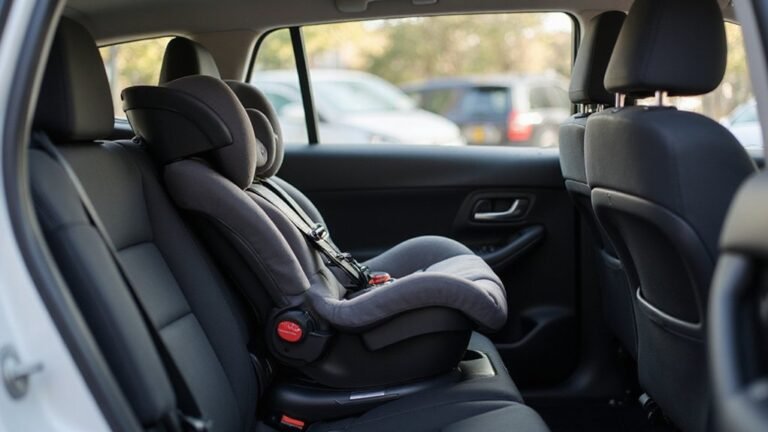
A mini crib typically lasts until your toddler reaches 35-40 pounds or hits the height limit specified by the manufacturer. Material durability plays a key role in maintaining its sturdiness during this extended period of use. You should switch from a mini crib to a standard bed once your child can climb out or exceeds the weight and size limits. Always refer to the manufacturer’s guidelines for safety and suitability. Age alone isn’t a reliable indicator; watch for signs like increased mobility, size, or comfortably fitting into the crib measurements. Following these limits helps ensure your child’s safety as they grow. Similar principles apply to car seats, where rear-facing designs provide significantly better protection for a child’s head, neck, and spine during a crash. When installing such seats, proper tension and angle adjustments are critical to achieving a secure fit that maximizes the safety benefits of the rear-facing position. For parents using a portable play yard, it is never safe to place a standard crib mattress inside it, as this creates dangerous gaps where a baby can become trapped.
Portability and Bedside Access for Nighttime Feedings
Portability is essential for nighttime feedings because it allows you to reposition your baby’s sleep space easily. A lightweight bassinet equipped with carry handles or wheels makes moving it seamless, so you can place it right beside your bed. This close proximity reduces the distance you need to reach for feedings or soothing, making nighttime care more convenient. The compact size of most bassinets also offers easier bedside access compared to a mini crib, which typically has a larger frame. When choosing a bassinet, ensure it meets safety regulations for bedside attachment, such as secure fastening to your bed. Additionally, standard crib mattress dimensions are different from bassinet sizes, so verify bedding compatibility—using fitted sheets designed for the bassinet’s mattress helps prevent loose bedding that could pose a safety risk. Overall, the ease of maneuverability and snug bedside fit are what make portability most valuable during nighttime feedings. Just as car seat choices involve safety, cost, and lifespan, selecting a bassinet requires similar consideration of these factors for your baby’s sleep space. For those who travel frequently, a car seat travel bag can offer similar convenience for protecting and transporting your baby gear.
Bassinet vs. Mini Crib: Cost Per Month of Use
A mini crib generally costs around $150 or less and lasts from birth through 18 to 24 months. This extended lifespan reduces the monthly cost to roughly $6 to $8. In contrast, a typical bassinet costs between $40 and $150 but only lasts 2 to 4 months, resulting in a monthly expense of $10 to $50. While a bassinet has a lower upfront price, spreading that cost over fewer months makes it more expensive on a monthly basis. Mini cribs, offering longer usability, deliver better value per month. Both options meet strict safety standards, but the durability of a mini crib’s materials means it can withstand toddler use without needing early replacement. The mini crib mattress size is typically 24 inches by 38 inches, which is designed to fit snugly in the smaller frame for safe sleep. Choosing a mini crib also reduces the monthly cost compared to a bassinet over the baby’s first two years.
Which One Saves You More Money Long-Term?
A mini crib typically costs between $100 and $300, making it a more economical choice in the long run. Although a bassinet’s sticker price might seem tempting, it usually only lasts 2 to 4 months. After that, you’ll need to purchase a regular crib, which can push your total costs to $450 or more. By investing in a mini crib, which can serve your baby from birth through age two or three, you spread out the expense over several years, resulting in a better cost per year.
You also save money by avoiding the need for additional accessories, like a second mattress, which can add up quickly. While bassinets may blend into your nursery decor and seem charming, their appeal is short-lived. Mini cribs also offer safety benefits because you buy one consistent size mattress rather than switching between different sizes or arrangements that might create risky gaps. Unless convenience is your top priority, opting for a mini crib is the smarter choice for your budget over time.
Bassinet, Mini Crib, or Full-Size Crib: How to Choose
Choosing between a bassinet, mini crib, or full-size crib depends mainly on your baby’s age and your home’s space. For newborns, a bassinet is ideal due to its small size and portability, allowing you to keep your baby close at bedside. As your baby grows and begins pushing up or rolling over, you’ll need to transition to a more stable option. A mini crib offers a good middle ground: it uses a firm mattress with adjustable heights and can last until about 18 to 24 months, all while saving space. Proper cleaning and maintenance of the mat or mattress surface is also important for hygiene and longevity. Full-size cribs are suited for dedicated nurseries and support your child’s growth into toddlerhood. When considering a bassinet, remember that its everyday use often includes lighter weight and easier portability compared to a mini crib, which can influence your daily routine. A mini crib is typically 36 inches long and 24 inches wide, making it a compact fit for smaller rooms or shared spaces.
Design and aesthetic choices also influence your decision. Bassinets tend to have sleek, minimalist styles, whereas mini and full cribs are usually more substantial in appearance. Ultimately, your choice should align with your room size, mobility needs, and how long you want the crib to last. Matching your baby’s developmental stage with available space ensures a practical and comfortable sleep setup.
Your Decision Checklist: What to Buy and When
Buy a bassinet before birth if room-sharing is your plan. Its small size makes it ideal for tight spaces and allows you to keep your baby close during the first few months. Once your baby outgrows the bassinet—usually around 15 to 20 pounds or when they start rolling—you should switch to a mini crib. A mini crib offers a longer usage span, often up to 18 months or more, making it a budget-friendly choice that can adapt to your child’s growth. The same principle of rear-facing safety applies to car seats, where proper positioning provides critical protection for infants.
Always verify that the mattress is firm and fits snugly with no gaps to prevent suffocation hazards. Never add loose bedding, pillows, or padding inside either setup. Check the manufacturer’s weight limits and ensure that any folding models have secure locks for stability.
Plan your transition from bassinet to mini crib before birth if you’re initially using a bassinet. Wait to purchase a mini crib until you see clear developmental cues, such as your baby consistently exceeding weight limits or starting to roll. This approach ensures safety and makes the most of each piece’s lifespan.