
Wondering how to safely freeze breast milk in storage bags? The process is straightforward and designed to preserve both the milk’s quality and your convenience.
By following a few simple steps, you can store breast milk efficiently, making sure it stays fresh until you’re ready to use it. Keep reading for easy tips on preparing, labeling, and stacking your milk for optimal storage.
Choose Breast-Milk-Specific Storage Bags for Safe Freezing
Choosing breast-milk-specific storage bags ensures safety and reliability during freezing. These bags are specifically designed for storing and thawing breast milk, making them more dependable than regular food storage options. Opt for food-grade, BPA-free bags to minimize chemical leaching, and check for BPS-free labels, which many brands now include. You can choose between single-use plastic bags or reusable platinum silicone options like Medela’s, both of which should be presterilized to reduce handling and contamination. Lansinoh bags are made from low-density polyethylene (LDPE) and feature a double zipper seal with reinforced side seams to prevent leaks, along with a tear-away tamper-evident top for added safety. Look for double-zipper seals with reinforced seams to prevent leaks. Flat-freezing designs help save space in your freezer and facilitate quicker thawing. Self-standing bases make filling easier and prevent spills. Clear measurement marks on the bags are essential for tracking how much milk you’re storing, while large write-on areas simplify labeling with date and volume. Reusable silicone bags can handle up to 500 uses, but always adhere to the recommended fill limits because the liquid expands when freezing, and overfilling can cause leaks or cracks. For a secure fit that prevents sliding and shifting in your car, consider using a car seat cover with similar reinforced seams and double-zipper technology. For organizing your frozen bags, a chest of drawers with multiple drawers can help keep your breast milk supply neatly sorted and easily accessible. When selecting a storage bag, also consider firmness similar to choosing a safe crib mattress that provides consistent support without sagging.
How Much Breast Milk to Freeze Per Bag (2–4 Ounces)
Since breast milk can’t be refrozen once thawed, it’s best to start with 2–4 ounces per bag. This size helps you avoid waste while matching a typical feeding. For newborns or small feeds, 2 ounces is ideal, while 4 ounces suits a standard single feeding as your baby grows. Use the bag’s markings or a kitchen scale to measure accurately. You can increase the portion as your baby’s appetite grows, but avoid filling the bag past the fill line to prevent overflow when freezing. Smaller portions reduce leftovers, especially for daycare or irregular schedules. If your pumping output exceeds 4 ounces, split it into multiple bags. This makes your freezer neater and simplifies thawing later. For safe travel, many parents rely on infant car seat models that have been professionally reviewed for safety. Choosing the right gear for your child’s safety involves different considerations than milk storage, as booster seats and car seats each have distinct pros and cons. A comparable safety review can help you evaluate the best portable sleep options for your baby.
How to Seal, Label, and Prep Breast Milk Storage Bags
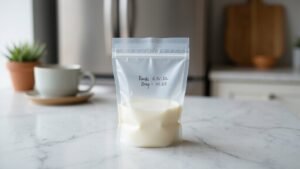
To seal, label, and prep breast milk storage bags correctly, follow these steps carefully. Begin by opening the bag at the top seal, keeping the bag upright and avoiding contact with the inside to prevent contamination. Fill the bag with the milk, leaving no more than 6 ounces of space at the top for expansion during freezing or storage. Remove excess air by gently pressing from the top, ensuring you don’t force milk into the zipper area. Close both zipper tracks completely and run your fingers along the seal to confirm it’s fully sealed with no gaps. Choosing a stable, easy-to-clean high chair can also simplify mealtime routines. Applying a quality nipple cream can help soothe soreness after pumping.
Immediately label the bag with the date and time using a permanent marker. Place the writing on the designated label area, avoiding the fill zone to prevent punctures. Verify the seal is leak-proof before moving the bag. Proper sealing and labeling ensure the milk stays safe and fresh during storage. Once sealed and labeled, the bag is ready for storage—whether in the fridge or freezer. For added convenience, consider using an all-in-one car seat if you need a versatile travel solution.
Freeze Bags Flat and Organize by Date for Easy Access
Seal and label the bags, then freeze them flat on a cookie sheet in a single layer. Place a second sheet on top and press down to create uniform slabs. This method compresses the milk into compact, space-efficient bricks, making it easier to store more in your freezer. Brands like Medula and Avent may require extra care to achieve this flat shape, with Avent being the most challenging due to its awkward opening. Once frozen solid, reorganize the bricks by standing them upright or tucking them into labeled bins or gallon bags to prevent scattering. For a consistent thickness, treat the freezing process like converting car seats by following the manufacturer’s specific setup instructions for best results. According to expert guidance, many children should remain rear-facing until at least age two for optimal safety. Choosing bags with strong, leak-proof seals helps prevent the most common causes of freezer waste and spoilage.
To keep your freezer organized, sort the frozen bags by date, placing the oldest in front for easy use first. Label the outer containers with a date range and total ounces to track how much you have. Group bags by volume as well so you can quickly grab the right size without digging through everything. This system helps keep your freezer tidy, accessible, and ensures you use the oldest milk first, reducing waste.
How Long Does Frozen Breast Milk Last? Storage Times and Thawing Tips
Frozen breast milk stored at 0°F (-18°C) or colder can be kept safely for up to 12 months. For maintaining the best quality, aim to use it within 6 months. Deep freezers provide optimal nutritional preservation, while standard refrigerator freezers are best within 9 months. Storage time is calculated from the moment you first freeze the milk. Just as rear-facing car seats protect infants by distributing crash forces across their stronger back, proper freezing techniques preserve the integrity of breast milk’s nutrients. Similarly, rotating infant car seats offer enhanced convenience by allowing you to swivel the seat for easier access and buckling. Always follow manufacturer safety guidelines for your storage bags, as their seals and materials are not universal across brands.