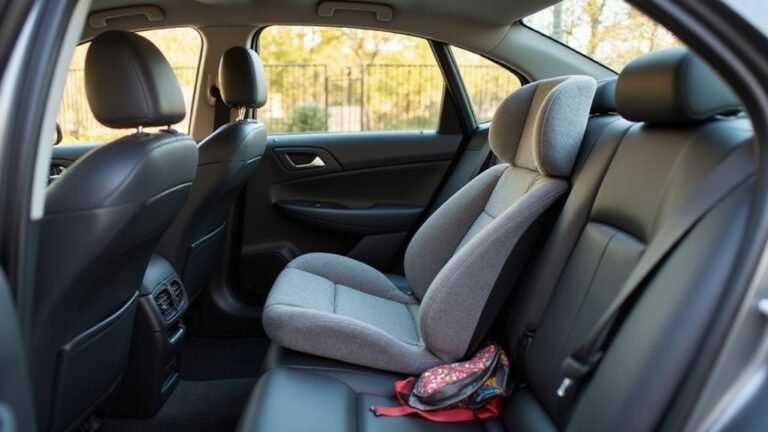


Choosing the right infant car seat can feel overwhelming with so many options out there. Whether you want something portable for quick trips or a seat that grows with your baby, the best fit depends on your child’s size and your lifestyle.
Here’s a quick overview to help you understand the main types so you can pick what works best for your family.
The details below will guide you through each option.
What’s the Difference Between Infant, Convertible, and All-in-One Seats?
Infant seats, convertible seats, and all-in-one seats each serve different needs and preferences, and understanding their differences helps you make the best choice. Infant seats are rear-facing only, designed to be portable, with a detachable base and carrier that can easily move between car and stroller. They typically accommodate babies up to about 30 pounds or until they outgrow the weight or height limits, usually around a year or so. For those seeking a perfect fit for their specific vehicle, reading detailed car seat cover reviews can help confirm compatibility with your car’s interior. To ensure you are getting a durable and reliable model, you can also check comparative reviews that evaluate top brands on quality and performance.
Convertible seats start as rear-facing but can be switched to forward-facing mode, often installing directly in your vehicle without needing a separate base. They tend to offer longer usage, supporting children up to 65 pounds in the forward-facing position and around 40 pounds rear-facing, which makes them a versatile option for extended use. Rear-facing seats significantly reduce the risk of injury in a crash by cradling the child’s head, neck, and spine.
All-in-one seats combine the features of infant and convertible seats but add a booster stage. They can be used rear-facing, forward-facing, and as a belt-positioning booster, accommodating children from infancy through elementary age. However, not all models are suitable for newborns, so you must check model-specific labels and weight limits carefully. Proper installation according to each seat’s manual is crucial, as regulations and guidelines vary. While infant seats are ideal for travel systems, convertibles and all-in-ones are better for longer-term use as your child grows.
Infant vs. Convertible: Which Is Safer for a Newborn?
Both infant seats and convertible seats meet the same federal safety standards, so choosing the safest option for your newborn depends largely on fit and proper usage. Infant seats are designed specifically for small newborns, which often makes them a better fit for preemies and allows for easier correct harness placement. Convertible seats can be used from birth if they fit your baby snugly and recline enough to keep the airway open, preventing breathing issues. Just remember, proper airbag integration is critical—never place a rear-facing seat in front of an active airbag, regardless of type. Extended rear-facing in a convertible offers long-term protection, but ultimately, safety depends on how well you install the seat and how correctly you harness your baby every time. No seat type is automatically safer; the safest choice is the one that fits your newborn well and with correct installation. For those seeking the perfect swing for a newborn, the same principle of fit and proper use applies to selecting a soothing motion device. Always follow the manufacturer’s time limits for how long a baby can remain in the seat to prevent positional asphyxiation. For parents comparing carrier compatibility, many infant seats click directly into compatible strollers for easy, on-the-go portability.
Why Infant Seats Win on Portability (And When That Matters)
Infant car seats are highly portable because they feature a removable carrier that allows you to move your sleeping baby without unbuckling them. You simply lift the carrier out of its base and carry it by the built-in handle. This design provides excellent travel convenience, especially during frequent stops or errands. You can click the seat into a compatible stroller frame for seamless transitions from parking lot to store, helping you avoid waking your child. The carrier also offers good weather protection—you can buckle your baby indoors before heading out into rain, cold, or darkness. Once parked, you can quickly remove the seat and carry it into your next destination, reducing your baby’s exposure to harsh elements. This level of portability is particularly useful during solo outings, daycare drop-offs, and any routine involving moving your baby in and out multiple times, especially when they are asleep. For those prioritizing ease of carrying, reviews of the best lightweight car seats highlight models under ten pounds that reduce strain during transfers. A clean, dry carrier also keeps the seat from transferring dirt onto other surfaces, similar to how a waterproof changing pad cover protects your baby’s changing area from messes. Unlike bulky crib mattresses, a car seat carrier is designed for easy travel convenience and quick transitions between the car and home.
When to Switch From an Infant Seat to a Convertible
You should switch from an infant seat to a convertible when your child reaches the seat’s height or weight limit—whichever comes first. Don’t rely on age alone; check the manual or label for specific measurements. A simple fit test: if there’s less than an inch of shell above their head, or if harness straps fall above their shoulders, it’s time to make the switch. While losing the convenience of breastfeeding in the car might seem frustrating, you can simply feed outside the vehicle. Keep in mind that stroller compatibility generally ends with the infant seat, but a convertible car seat allows extended rear-facing protection up to 40–50 pounds. Most families switch between 9 and 18 months. To be prepared, start researching convertible options around 6 months so you can transition smoothly. For older children who need a different level of support at the dining table, consider the top booster seats for table safety and comfort. Moving to a convertible seat helps keep your child safer, longer, without sacrificing rear-facing safety. Remember that infant car seats expire and safety signs should be checked to avoid using an outdated seat. Using a reliable sterilizer for breast pump parts ensures cleanliness and hygiene for feeding equipment.
Do All-in-One Seats Save Money Long-Term?
Not every all-in-one seat is a money-saving choice in the long run. The price gap between all-in-ones and some highly comparable convertible seats can be small, sometimes just a few dollars, meaning you might not save much by choosing an all-in-one. Comfort features like extra padding, adjustable headrests, or built-in recline options can add to the cost, making the all-in-one less of a bargain. Additionally, if your child outgrows the seat early or if the seat doesn’t fit well in your vehicle, you might end up purchasing additional seats sooner, negating potential savings. If you’re already planning to buy a separate infant seat for convenience or specific features, the all-in-one may not cut costs enough to justify choosing it over separate options. For comparison, a crib mattress pad can also protect the seat’s fabric from spills and leaks, extending its usability. For comparison, a chest of drawers with multiple drawers can offer better organization for storing various car seat accessories and essentials. Finding the correct flange size for your breast pump, however, is a separate challenge that requires precise measurement to ensure comfort and efficiency.
Your Toddler’s Next Seat: Booster or Harness-to-Booster?
Once your toddler has outgrown the forward-facing harness, the best choice is a harness-to-booster seat that extends harness use first. These seats offer a 5-point harness system that keeps your child securely restrained longer, reducing slouching and ensuring proper positioning. Safety standards stipulate that in harness mode, the seat must actively restrain your child, not just position the vehicle’s belt. Many harness-to-booster seats come with added padding and side-impact protection during the harness phase, which enhances comfort and safety, much like the perfect fit offered by top leather car seat covers. Unlike a booster, a harness-to-booster seat provides active restraint independent of the vehicle’s belt system. This extended use is important because infant car seat lifespan limits how long any seat remains safe before materials degrade.
You should wait until your child reaches at least 40 pounds and is approximately 4 years old before switching to a standalone booster. Boosters depend entirely on the vehicle’s seat belt and your child’s maturity to sit upright throughout the trip. If your child is not yet capable of maintaining proper posture or maturity, a harness-to-booster seat with integrated padding offers a safer, more comfortable transition.
Quick Decision Guide: Match Your Child’s Age and Size to the Best Seat
Age alone is only a rough guide; your child’s exact height and weight are what determine the appropriate car seat. For newborns and smaller babies, an infant-only seat is the best fit. These seats are portable, making handheld carriers ideal for easy transport, and compatibility with strollers helps with errands. Switch to a larger seat only when your child exceeds the rear-facing height or weight limit — usually around 22 to 35 pounds. Convertible seats generally offer a longer lifespan because they transition from rear-facing to forward-facing as your child grows. For comparison, a changing station for dresser is a similar type of long-lasting furniture purchase.
Once your child outgrows that seat, you need a convertible car seat. Keep your child rear-facing until at least age 2 to provide better protection for their head and neck. Most convertible seats accommodate rear-facing up to 35 to 50 pounds. When they reach those limits, transition to forward-facing harnessed mode, which is usually suitable starting at around 20 pounds. Always check that the harness fits snugly at or above your child’s shoulders. Your child’s specific size, rather than their age, is the key factor in progressing to the next seat stage.