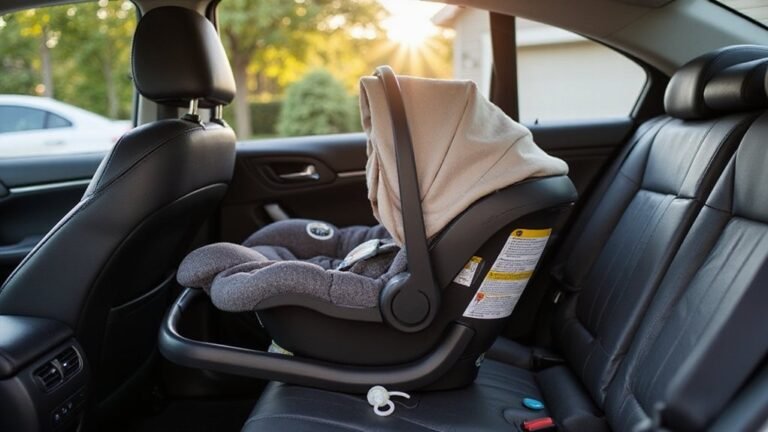

Deciding between a booster seat and a car seat can feel confusing, especially with safety and legal requirements in mind.
The key difference lies in how each type keeps your child secure and at what age or size they’re appropriate.
Understanding how they compare will help you choose the best option for your child’s current stage.
Keep reading for the full details you need.
Car Seat vs. Booster Seat: What’s the Difference?
A car seat and a booster seat differ primarily in their harness system and how they secure your child. A car seat uses an internal five-point harness that attaches directly to the seat, providing full restraint. This harness keeps your child securely in place and controls their posture. A booster seat, on the other hand, does not have a harness. Instead, it relies on your vehicle’s lap and shoulder belt to restrain your child, positioning them correctly for the belt to work effectively. For ensuring a perfect fit of the car seat itself, many parents look for the best car seat cover to protect the harness and padding. For drivers seeking a premium upgrade, reviewing top leather car seat covers can help maintain the interior’s appearance and comfort.
Compatibility also varies significantly. A car seat’s shell is installed deeply into the vehicle seat, often using LATCH systems, which secure both the seat and your child. A booster seat, however, simply rests on the vehicle seat. Its purpose is to elevate your child so the vehicle’s lap and shoulder belts fit properly, but it does not attach to the car itself. This means a car seat offers built-in restraint and posture control, while a booster seat mainly adapts your child’s size to the existing vehicle belt system. A convertible car seat, unlike a booster, can be used rear-facing or forward-facing to accommodate a child’s growth over multiple stages.
How Car Seats and Boosters Keep Kids Safe
A harnessed car seat with a 5-point system keeps your child secure in a crash by distributing crash force across the chest and hips, reducing injury risk by up to 82% compared to using a seat belt alone. Once your child outgrows that harness, a booster seat becomes essential. Instead of a harness, it raises your child so the vehicle’s lap and shoulder belts fit correctly, ensuring the lap belt rests on the upper thighs and the shoulder belt crosses the chest. Proper belt positioning is crucial because it keeps the seatbelt on strong bones and prevents it from riding into soft tissue during a crash. Boosters lower injury risk by 45% and are a vital step for older children transitioning out of harnessed seats. For parents seeking a single travel system, many car seat and stroller combos integrate a harnessed infant seat that clicks into a stroller frame, but the booster stage requires a separate seat without a stroller attachment. This is similar to how a newborn may benefit from a swing that mimics gentle motion to soothe them during rest. For families who frequently venture off pavement, choosing a stroller with all-terrain wheels can provide a smoother ride over uneven ground.
When Is Your Child Ready for a Booster Seat?
Your child is ready for a booster seat when they have outgrown their forward-facing harness seat and meet specific size and maturity requirements. Typically, this means they exceed the seat’s height or weight limit, usually around at least 40 pounds. However, the key factor is how the seat belt fits your child. Experts recommend waiting until your child reaches 4 feet 9 inches tall, the typical height where seat belts fit correctly without a booster. Without a booster, the lap belt should lie snug across the upper thighs, not the stomach, and the shoulder belt should cross mid-chest, not the neck. If the seat belt does not fit these criteria, your child isn’t ready for a booster. For parents concerned about maintaining milk production while on the go, a hospital-grade breast pump can provide the consistent suction needed to stimulate supply.
Maturity is equally important. Your child must be able to sit upright during the entire ride without slouching, leaning, or unbuckling. If they tend to shift position or can’t stay seated properly when tired, they should stay in their harness seat a bit longer—even if they meet the size requirements. Always check the expiration date on the current car seat before continuing its use.
What Type of Booster Seat Does Your Child Need?
Once your child is ready for a booster, the next step is selecting the right type. High-back boosters are ideal for younger children because they provide essential head and neck support, especially in vehicles that lack high headrests. They also enhance side-impact protection. Backless boosters work best for older children who no longer need back support, but they rely on your vehicle’s headrest to ensure proper positioning. Combination seats offer versatility by allowing you to switch from harness mode to booster mode as your child grows. For added comfort, consider padding options, especially on longer trips. While age is a factor, your child’s size and your vehicle’s seat shape are equally important. Always ensure you use a lap-and-shoulder belt with the booster—never the lap-only belt—to keep your child safe and properly restrained. For an infant seat, Evenflo offers top-rated models like the SafeMax with infant inserts for a secure and comfortable fit.
The Quick Guide to Choosing a Car Seat or Booster
When your child outgrows a forward-facing car seat, you’ll need to decide between switching to a booster seat or keeping them harnessed longer. Don’t rush this change. First, check Safety standards: harnessed car seats keep your child secure using a five-point harness that fits over the shoulders, hips, and between the legs, providing more protection. Boosters, on the other hand, depend on your vehicle’s lap-and-shoulder belt to position your child correctly. For nursing moms, a high-quality electric pump can offer similar convenience by automating milk expression. For organizing all those car accessories, a chest with eight deep drawers offers ample storage space. A rear-facing car seat remains the safer choice for kids because it cradles the head, neck, and spine during a crash.
Your child must be able to sit still and upright without slouching or leaning during the ride. If they move around or cannot stay seated properly, it’s safer to keep them harnessed. Many children need a booster until they are about 4 feet 9 inches tall, which usually occurs around ages 8 to 12. When choosing, prioritize your child’s maturity and whether the belt fits correctly over their hips and chest rather than age alone. Proper belt fit is essential to ensure safety, so observe how the belt sits when they’re seated in the vehicle.