
If you’re wondering how long to spend pumping breast milk, you’re not alone. Most sessions last between 15 and 30 minutes.
But once your supply is established, 15 to 20 minutes usually suffice. The key is focusing on milk flow and stopping when your breasts slow to drips.
Keep reading to learn how to make pumping efficient and comfortable for you.
The Short Answer: 15 to 30 Minutes Per Session
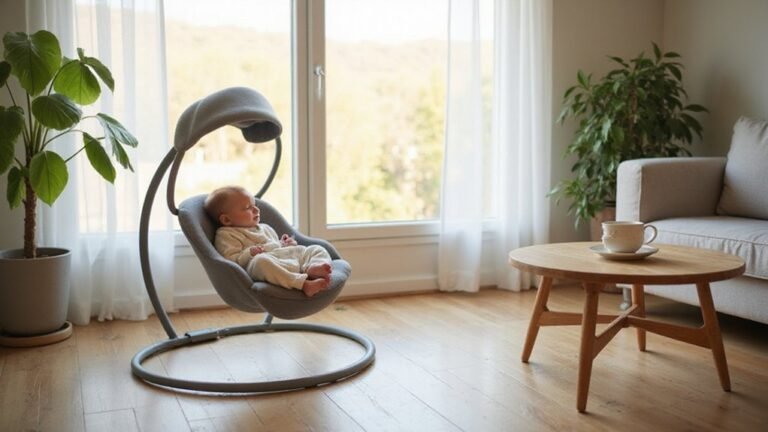
A typical pumping session lasts between 15 and 30 minutes. Once your milk supply is well established, most sessions tend to fall closer to the 15 to 20 minute range. In the early weeks, expect sessions of 20 to 30 minutes as you work through challenges like establishing letdown and adjusting to your pump. The type of pump you use influences session length: double electric pumps generally require about 15 to 20 minutes, while single pumps may take twice as long. To improve milk output efficiently, focus on ensuring a proper flange fit and selecting optimal settings—these factors help boost your milk flow without unnecessarily extending your pumping time. Just like finding a perfect fit for a car seat cover enhances comfort and function, ensuring a proper flange fit is critical for efficient pumping. Investing in a nursery glider for your pumping space can also enhance comfort during longer sessions. When your milk flow slows to drips, continue pumping for an additional 2 to 3 minutes to maximize drainage. Remember, while time is a helpful indicator, listening to your body and observing your milk flow are equally important cues. Just as car seat inserts are removed when your baby outgrows them, you should reassess your pumping routine as your milk supply matures.
Why Time Isn’t Your Best Pumping Stopping Cue
Your best cue to stop pumping isn’t the clock, but how your milk flow behaves. Relying solely on a preset time can lead to incomplete milk removal and increase the risk of clogged ducts. Instead, observe your flow cues: stop when milk flow slows significantly, your breasts feel well-drained, or you’ve pumped for about two minutes after the last drops. Keep in mind that early in a session, most milk is often expressed within the first 10 to 15 minutes, but sticking rigidly to a timer might cause you to miss a second letdown. The duration of effective pumping can vary based on your lactation stage and individual supply—some sessions only need 10 minutes, others up to 30. For optimal results, focus on your body’s signals rather than a set timer. Choosing breastfeeding essentials like absorbent nursing pads can boost your comfort and confidence during sessions. Just as choosing the right storage solution depends on quality and performance, effective pumping relies on reading your body’s cues rather than a fixed schedule. Selecting the right feeding setup similarly depends on the best high chairs for a secure and comfortable experience.
Single vs. Double Pumps: How Pump Type Affects Session Length
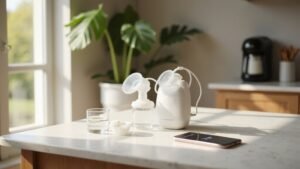
Using a double pump can cut your session time in half compared to a single pump. With a single pump, you spend about 15 to 20 minutes on each breast, resulting in a total session of 30 to 40 minutes. This can add up if you pump frequently. A double pump, on the other hand, stimulates both breasts simultaneously, reducing the total session time to 15 to 20 minutes. This overlap allows you to save a significant amount of time without rushing. If you pump daily or multiple times a day, investing in a double pump can make your routine much more manageable. Single pumps are suitable for occasional use, but double pumps are more efficient for regular pumping schedules. Finding the right equipment is similar to choosing the best crib mattress, as both require top options compared for a comfortable fit.
How Often to Pump in the Newborn Period
During the newborn period, you’ll typically need to pump or nurse about 8 to 12 times within 24 hours, roughly every 2 to 3 hours around the clock. This frequency supports your milk supply, especially in the first few weeks, when consistent milk removal signals your body to produce more. Don’t skip overnight sessions; maintaining this pattern overnight helps reinforce supply stability. Choosing a perfect newborn swing can provide a safe place for your baby while you pump.
If you’re exclusively pumping, follow the same schedule, aiming to mimic this frequency. Keep your pumping equipment clean and ready to avoid delays or contamination. Store expressed milk in labeled containers or bags, making it easier to track and organize your supply.
Each pumping or nursing session should take approximately 15 to 20 minutes or until your breasts feel soft. It’s important not to go longer than 4 to 5 hours between sessions early on, as regular empties foster a healthy, steady supply. Adapting to your baby’s demand rather than sticking to a rigid timetable results in more effective milk production and less stress. Maintaining this routine for at least the first 6 weeks establishes a strong foundation for ongoing breastfeeding success.
When You Need More Time: Power Pumping for Supply
Power pumping involves a specific cycle: 20 minutes of pumping, followed by 10 minutes of rest, then three additional 10-minute pumping sessions with rest periods in between, totaling about an hour. This technique signals your body to increase milk production by mimicking a baby’s cluster-feeding pattern. Use a double electric pump with properly fitted accessories to ensure efficient emptying of the breasts. The goal isn’t to maximize milk in a single session but to stimulate prolactin levels over several days. Aim to perform this once or twice daily, usually in the morning, for about 3 to 7 days in a row. You may notice an increase in milk supply after just 2 to 3 days, although individual results can vary. Remember, power pumping complements your regular routine; it’s not meant to replace it. For added comfort during sessions, ensure your booster seat at the table provides proper support and stability. You can also apply the same cycle to converting a Graco car seat to a booster, ensuring each step is followed consistently. To maintain hygiene for all your baby gear, regularly clean your bottle warmer using a descaling solution to prevent mineral buildup.
Common Mistakes That Make Pumping Take Too Long
Small errors in technique or equipment can significantly extend your pumping sessions. For example, using a flange that doesn’t fit properly restricts movement and reduces efficiency. Ensure your nipple has enough room to move freely—an ill-fitting flange can also harm nipple health and decrease milk flow. Avoid cranking the suction to maximum strength; it causes discomfort, releases stress hormones, and slows down letdown. Medium suction levels are generally more effective and comfortable. Choosing the wrong pump settings can similarly hinder your output and prolong sessions. Knowing when to switch to forward-facing car seats involves similar attention to proper fit. To further protect your equipment, always follow the care advice for cleaning and drying your pump parts. Stopping your session too early can leave your breasts partially emptied, making future pumping take longer. Aim for 15–20 minutes per session to ensure complete milk removal. Inconsistent pumping schedules backfire as well; try to pump every 2 to 3 hours to maintain a steady supply. Finally, regularly check your equipment; worn valves or aging parts weaken suction and hinder performance. Performing routine troubleshooting and replacing faulty parts prevent delays and keep your sessions efficient.
Sample Schedules for Exclusive Pumpers and Working Parents
For working parents, scheduling three pumping sessions during the workday—around 9:00 am, 12:30 pm, and 4:00 pm—helps maintain your milk supply without disrupting your workflow. Keeping your pumping accessories clean and your milk storage organized saves time and reduces stress during busy days. Pump at these predictable times so your body anticipates the routine, which can support a steady milk supply and prevent discomfort. If you are considering a mini crib for your baby’s nursery, note that its smaller size can make nighttime pumping sessions more convenient by fitting closer to your bedside. Always adhere to safety limits for storing breast milk to ensure its quality and prevent spoilage. Using a bottle warmer with the correct settings can gently heat stored milk without destroying its nutrients.