
Choosing between a mini crib and a Pack ’n Play often comes down to space and convenience.
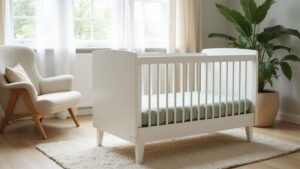
A mini crib offers a more solid and permanent sleep surface.
While a Pack ’n Play provides portability with easier fold-up for travel.
Understanding their size differences and features will help you pick the best option for your needs.
Keep reading to see how they compare in detail.
What Are the Exact Dimensions of a Mini Crib Vs Pack ’N Play?
A mini crib typically measures about 24 inches wide by 38 inches long, providing an interior sleep surface of approximately that size. The full frame usually spans around 26 to 28 inches wide and 40 to 43 inches long. In contrast, Pack ’n Plays generally feature a sleep area roughly 28 inches by 40 inches, making it about 4 inches wider and 2 inches longer than a mini crib mattress. Because of these size differences, you cannot interchange mattresses between the two: a mini crib mattress will not fit properly into a Pack ’n Play, and vice versa. Always ensure that your mattress matches the exact labeled dimensions for safe and proper use. Regardless of which sleep space you choose, perform the same safety checks before every use, just as you would with an infant car seat, including verifying a firm, flat surface and that all hardware is secure. For full-sized cribs, these measurements are generally standardized to 76 centimeters wide by 133 centimeters long for the interior mattress area. When assessing accessories for these sleep spaces, it is just as important to find a perfect fit to ensure safety and comfort, similar to how the best car seat covers are reviewed for compatibility.
Which One Fits Better in a Tiny Nursery or Shared Room?
A mini crib typically fits better in a tiny nursery or shared room due to its narrower width, usually around 24 to 27 inches. This size leaves more walkway clearance and prevents the space from feeling cramped. Its footprint of approximately 7.5 to 8 square feet makes it easier to position beside your bed or along a wall without overwhelming the room. The furniture-like design helps it blend seamlessly with your nursery decor, creating a more organized and permanent look. For parents who also need a comfortable seating option while feeding, choosing a best chair for feeding with a slim profile can further optimize the tight space. To keep the mini crib space organized and safe, follow the care advice provided by product manufacturers for cleaning the mattress and frame surfaces. To ensure every part that touches the baby stays sanitized, consider using a steam sterilizer designed for small spaces.
On the other hand, a Pack ’n Play offers greater versatility with its foldability, making it ideal if you value quick room reconfiguration or plan to use it for travel. However, it generally takes up a slightly wider space and may not fit as snugly into a very tight nursery. In shared spaces, the mini crib’s slender profile provides superior circulation for both you and your baby, while the Pack ’n Play’s flexible layout can adapt to various room arrangements but requires a bit more room width.
How Compact Are They When Stored or Folded Away?
Mini cribs with folding capabilities can compress to just 5.5 to 8.5 inches wide for storage. This narrow folded width makes them ideal for tight spaces where saving room is a priority. In contrast, Pack ’n Plays fold into a thicker, rectangular carry form that is more portable and easier to carry around. Parents seeking a travel-friendly setup might also prefer a double infant stroller that folds compactly with car seats attached, though that system is designed for outings rather than home storage. Understanding these differences is easier when you review the key features of convertible cribs, which often include multi-stage design options that a folding mini crib lacks. For safe milk storage on the go, many parents use breast milk storage bags that seal tightly and fit easily into diaper bags.
The mini crib’s design keeps the mattress inside the frame when folded, reducing loose pieces and making it simpler to store. However, this often means sacrificing some aesthetic appeal and material durability versus non-folding models. Pack ’n Plays, on the other hand, typically stack the frame, fabric, and mattress base together, resulting in a bulkier but more self-contained unit. For example, the Delta Children mini crib stores its size-specific 1.5-inch mattress within the folded frame, keeping components together for simplicity.
For very limited spaces, a mini crib’s slim folded profile is advantageous. But if you need something easy to grab and go, the Pack ’n Play’s bulked-up but more portable shape makes it convenient for transport and quick setup. Your choice depends on whether you prioritize an ultra-thin storage footprint or a compact, all-in-one unit you can carry easily.
Mini Crib Vs Pack ’N Play: Which Holds up for Daily Sleep Use?
The mini crib is the better choice for daily sleep use because it offers a more stable and crib-like setup. Its rigid, stationary frame supports a firmer, more comfortable mattress similar to a traditional crib, making it suitable for nightly sleep. This allows it to function as a permanent piece of nursery furniture, blending seamlessly with your decoration. This is similar to how a booster seat provides a more stable and dedicated setup than a travel-oriented alternative for daily use. However, safety is also a key factor, and exploring better alternatives can help ensure parents find the most suitable option for their child’s sleep environment. For long-term durability, a mini crib offers superior construction and stability compared to a collapsible travel playard.
In contrast, the Pack ’N Play is designed primarily for travel convenience. Its lightweight, collapsible frame and thinner sleeping surface make it less durable for regular, long-term sleep. While it’s great for occasional naps or trips, the mini crib’s stability and sturdy design give it the edge for consistent, restful nights.
What Are the Weight and Age Limits for Each Option?
Weight and age limits for each option vary significantly. Mini cribs typically support children weighing between 35 and 50 pounds. This range generally accommodates babies from birth up to 18 to 24 months, though some smaller children may use the crib until they are about three years old. You should stop using the crib earlier if your child climbs out or exceeds 35 inches in height. Pack ’n Plays have different limits: bassinet inserts usually support up to 15 to 20 pounds, while the main sleep surface can handle around 20 to 30 pounds. Most children outgrow these by between 3 and 6 months. Age alone is less important than your child’s mobility and size. Always check the manufacturer’s label to confirm weight and age restrictions for your specific model, and follow those guidelines strictly to ensure safety. Material safety and the manufacturer’s weight caps are critical factors—don’t be misled by color options or estimates. For a sturdy, long-lasting setup, consider applying tips for a safe result similar to those used when building drawer dividers. The top rated crib mattresses often emphasize quality and performance to support safe sleep through these weight limits. Just as with car seats, checking for an expiration date on the manufacturer’s label is crucial to ensure the product remains safe to use.
Can You Use a Mini Crib or Pack ’n Play as a Full-Time Bed?
A mini crib or Pack ’n Play can serve as a full-time bed, but their suitability depends on its use and your child’s age. A mini crib typically accommodates a baby from birth up to around 24 months, especially for non-climbers. It provides a firm, crib-like sleep surface with rigid sides and a proper mattress support that aligns with safety standards. This setup promotes safe sleep by avoiding soft bumpers or loose items, supporting decor safety. For parents prioritizing travel or space-saving, a portable bassinet for newborn offers a lightweight alternative with a smaller footprint. However, following expert timing guidance is crucial, as many safety organizations recommend keeping children rear-facing for as long as possible before any transition. Additionally, you should always check the car seat lifespan to ensure any travel system components remain safe and effective for your baby.
A Pack ’n Play can also be used full-time as a sleeping space, but its thinner, less crib-like mattress requires more careful attention to bedding hygiene. You need to regularly check that the fabric is taut, the mattress is approved by the manufacturer, and there are no gaps or wrinkles that could pose a safety hazard. While offering greater portability, a Pack ’n Play generally sacrifices nightly comfort compared to a traditional crib. Both options are viable for full-time use but come with different demands for safety and comfort.
Which One Wins for Your Budget, Space, and Sleep Needs?
A mini crib costs around $350, while a Pack ’n Play can be found for roughly $79. If budget is your main concern, the Pack ’n Play is the more affordable choice, but it offers a softer, less firm sleep surface. A mini crib provides a sturdier, deeper sleep environment, similar in size to a regular crib, with the added benefit of blending seamlessly into your nursery decor thanks to its furniture-like appearance. It also costs more upfront and requires a separate mattress and sheets.
Both options have comparable footprints, making them suitable for small spaces. The mini crib’s design supports a more permanent setup and better sleep quality, but it can feel bulkier and less portable. Meanwhile, the Pack ’n Play’s fold-away feature makes it easy to store and move around, adding flexibility but sacrificing some stability and firmness in the sleeping surface. Your choice ultimately depends on whether you prioritize sleep quality and decor integration or budget-friendly, versatile storage.