
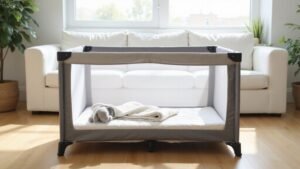
You’re probably wondering how long your baby can safely use a pack n play. The general rule is to stop once your baby reaches 30 pounds or is about 35 inches tall.
Typically, this occurs between ages 1 and 2. But size and behavior matter more than age alone. Keep reading to learn the exact limits and safety tips to ensure your little one stays safe.
When Should You Stop Using a Pack N Play?
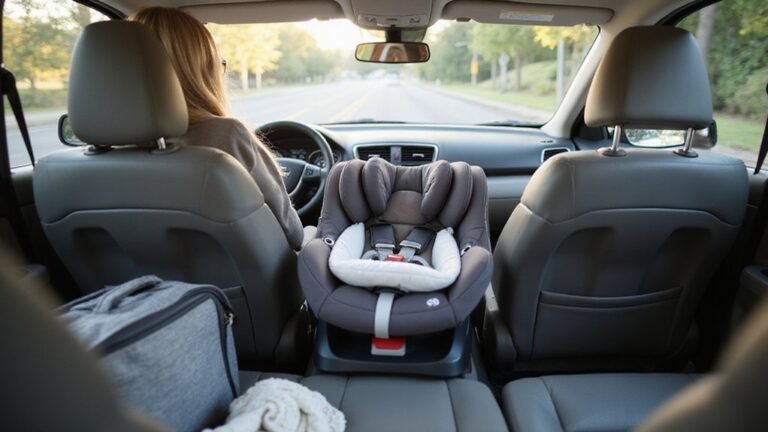
You should stop using a Pack N Play when your child starts climbing out or attempting to escape. Climbing increases the risk of falls and injuries, especially if they are standing or leaning on the sidewalls. Also, discontinue use when your child shows signs of discomfort—if they appear cramped or cannot lie flat comfortably, it’s time to transition them to a different sleeping arrangement. For families with newborns who need a portable sleeping option, selecting a lightweight newborn car seat can provide a safe travel alternative, though it is not a substitute for sleep. Ensuring a perfect fit for your car seat cover can help maintain comfort and safety during travel.
Most children outgrow Pack N Plays around the ages of 1 to 2 years, as their mobility and curiosity increase. When climbing skills improve, confinement becomes frustrating and no longer serves its purpose. Additionally, stop using the product if its condition deteriorates—such as sagging mattresses or torn mesh—since safety could be compromised. For infants who need a different soothing option, you might consider a newborn swing instead.
While cost considerations might tempt you to keep using it longer, safety should always come first. Customization options like adding a bassinet do not address unsafe climbing behaviors or discomfort. Trust these signs rather than relying on age alone when deciding to switch to a new sleeping solution.
Know the Key Limits: Age, Weight, Height, and Bassinet Rules
There are clear weight and height limits for pack and play playards and their bassinets, and following these is crucial for safety. Most main playards are designed for children up to 30 pounds or 35 inches tall, whichever comes first. Once your child reaches either of these thresholds, it’s time to transition out of the playard to prevent accidents caused by exceeding the safety boundaries. Finding the right fit for your baby is similar to how finding the right fit for a breast pump flange ensures comfort and efficiency. Selecting a breathable mattress can also help maintain airflow and comfort during sleep in the playard.
For bassinets, the rules are stricter. You should stop using the bassinet at 15 pounds or when your baby begins to roll, push up, or sit up—usually around 6 months of age. These limits help ensure your infant remains in a safe position and prevent falls or injuries as their mobility increases.
Always check the specific model’s sticker or manual for exact weight and height limits because they can vary between brands and designs. Remember, any climbing or tipping behavior by your child overrides all age, weight, and height restrictions, demanding immediate discontinuation of use to prevent accidents.
Why Height Limits Often Matter More Than Age
Height limits are more important than age because they are directly embedded in federal safety rules. For example, play yards are designed for children under 35 inches tall who cannot climb out. This creates a strict cutoff that isn’t based on age alone. You’re relying on your child’s physical size, which better reflects their actual safety needs. As your toddler grows, their center of gravity rises, increasing the risk of tipping or leaning over the sides. That’s why you’ll stop using the pack ’n play once your child reaches 35 inches, even if they are still under the weight limit. Age may offer a rough estimate of development, but height provides a clearer safety signal. Instead of waiting for a birthday, check their height regularly to determine if it’s time to switch to a different safety setup. Height milestones give you a more accurate, non-negotiable boundary for safe containment. In a similar way, rear-facing car seats are safer because they support the head and spine in a crash, evenly distributing force. For selecting a travel system, reading best infant car seat and stroller combo reviews can help you compare top picks on quality and performance.
3 Safety Signals That Tell You to Stop Using the Pack N Play
If your child starts climbing or trying to escape from the pack and play, it’s a clear sign to stop using it. When they stand with feet at the edge or repeatedly scale the mesh sides, the play yard no longer keeps them safely contained. Structural damage also indicates it’s time to replace—tears, loose stitching, or a wobbling frame can compromise safety and increase injury risk. Never ignore these signs, as they point to a potential hazard that’s beyond simple repairs. If the unit feels stuck during folding, consult troubleshooting tips to check for frame misalignment or jammed locking mechanisms. For comparison, a chest of drawers often uses multiple drawers for organized storage, but a pack n play prioritizes safe containment with a single open space.
Watch for your child’s growth: if their head touches the top rail or they seem cramped inside, they’ve outgrown the space. Always adhere to the manufacturer’s weight limit, typically around 30 pounds, and height restrictions, roughly 35 inches. Avoid adding extra mattresses or placing the playard on elevated surfaces. These modifications can void safety certifications and substantially raise the risk of injury. Recognizing climbing behaviors, damage, or signs of discomfort ensures you switch to a toddler bed or playpen at the right time, maintaining your child’s safety.
The Bassinet and the Main Playard Have Totally Different Limits
The main playard typically supports 25 to 35 pounds and can last until your child is around 2 to 3 years old. However, height restrictions are crucial: stop using it once your child reaches 35 inches tall or begins climbing out. It’s important not to confuse the main playard with the bassinet, as they serve different purposes and have different safety limits. Always match the specific zone—whether weight or height—to your baby’s current milestones. Relying on the wrong setup can compromise safety and durability. For younger infants, a dedicated bouncer seat for newborns provides a safer, contained alternative with its own weight and recline guidelines. When choosing a portable pump, many parents find that a wearable breast pump offers hands-free convenience similar to a playard’s portability for naps on the go. For older toddlers using the main playard, many families upgrade to a travel car booster seat for safer on-the-go seating that matches their child’s weight and height.
Quick Trick: Find Your Specific Model’s Exact Rules
The quickest way to find the exact rules for your Pack ’n Play is to locate its specific model number. You’ll find it on a label or storage tag on the frame’s underside. Use that model number to search the manufacturer’s official website for accurate information, as generic advice may not apply. Your owner’s manual provides the definitive limits—such as weight, height, and age caps—for all parts like the playard, bassinet, and changing table.
Main weight limits for the primary playard typically range from 25 to 35 pounds; height limits are generally around 35 inches. Bassinet attachments usually have a maximum weight of around 15 pounds. Always prioritize your specific model’s instructions over generic estimates. Stop using the equipment when your child reaches any posted limit—whether it’s weight, height, age, or if they can climb out.
After You Hit the Limit: Safe Alternatives to the Pack N Play
After the best grow with me infant car seats are outgrown, transitioning to a safe sleep area is vital. Once your child surpasses the weight, height, or climbing limits of your Pack ’n Play, it’s time to transition to a new sleep environment. A good first step is placing a mattress directly on the floor. This reduces fall risks since your child cannot climb out or fall from a raised surface. Floor beds support your child’s growing independence while keeping safety in mind. For a more contained option, consider a toddler bed with low side rails. These beds use a standard crib mattress and fit easily into your current bedtime routine. If your child still fits within the weight and height limits, a full-size crib remains a safe choice, especially when paired with a firm Graco crib mattress that meets current safety standards. For added comfort and stability, you can also place a firm mattress topper on the floor bed if it meets safety guidelines. Avoid inflatable or travel beds for toddlers under two years old, as they lack the sturdy structure necessary for safe sleep. No matter which option you choose, ensure the sleeping area is free of pillows and loose bedding to maintain a secure environment.