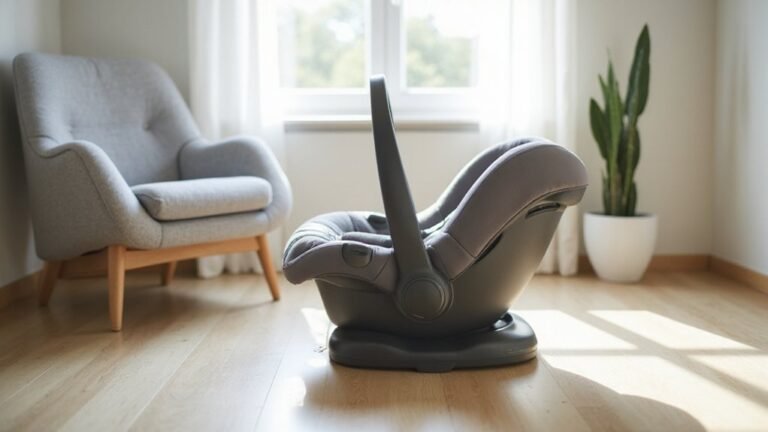


Thinking about how to carry an infant car seat safely without straining your back or risking your baby’s safety? The key is using proper lifting techniques, keeping the seat close to your body, and ensuring all harness components are secure before lifting.
With the right approach, carrying a car seat can be easier and safer for both of you. Keep reading to learn the best tips for effortless, injury-free carrying.
Why the Right Infant Car Seat Carry Technique Matters
The correct infant car seat carry technique is essential for several reasons. First, it helps protect your body from injury. Lifting the seat with your legs and core instead of your arms reduces back strain and shoulder pain, which is especially important during postnatal recovery. This method also prevents repetitive stress injuries that can happen if you carry the seat on one side repeatedly. Choosing a rear-facing position is another crucial safety measure, as it provides superior protection for your baby’s head, neck, and spine in a crash. Second, it ensures your baby’s stability during transport. Keeping the seat close to your body and level minimizes jostling and helps maintain proper infant head support. Gentle handling also prevents dirt and wear on the car seat fabric during transfers. Third, it gives you better control. Using a firm, two-handed grip in front of your body allows for deliberate, steady movement, reducing the risk of drops or bumps that could disrupt the seat’s setup before reinstalling it. For convenience during longer trips, storing expressed milk in top breast milk storage bags helps keep feeding supplies organized and safe alongside the car seat. Choosing a firm, flat surface for the car seat base is equally important to maintain stability and prevent the seat from shifting. Mastering this technique makes frequent trips safer and less tiring.
4 Quick Safety Checks Before You Carry the Seat
Before you lift the seat, run through a quick checklist to confirm everything is ready. First, double-check your seat installation. Apply firm pressure at the belt path; the seat should not wiggle more than an inch. Recheck this after any ride, as installation can loosen during travel. For added comfort during car rides, consider pairing your car seat setup with soft, breathable crib sheets for your baby’s nursery bedding.
Next, verify the recline angle. Your infant seat needs the correct tilt to keep their airway open. Use the built-in level indicator if available. An overly upright seat can compromise breathing. Establishing a consistent routine for checking these angles can help you remember to adjust the tilt before every trip.
Now, inspect the harness adjustment. Straps must lie flat, untwisted, and be positioned at or below your baby’s shoulders for rear-facing installation. The chest clip should sit at armpit level. Perform the pinch test—if you can pinch any webbing at the shoulder, tighten the straps. Avoid bulky clothing under the harness to ensure a snug fit. Just as finding the right fit for a breast pump flange prevents discomfort, a properly adjusted harness ensures your baby’s safety and comfort during travel.
Finally, confirm the seat isn’t expired, recalled, or damaged from a crash. Never add aftermarket accessories, as they can create crash hazards.
Pick the Right Carry Technique for Your Situation
Matching your carry technique to the situation is essential because each infant seat and distance varies. For shorter trips, thread your arm through the handle and let the seat rest on your shoulder. This method reduces strain on your hand, especially if the seat is lightweight. A dentist shared that this is the “world’s best parenting tip” for proper handling. If you need to carry the seat with one hand, slide your forearm under the handle and rotate your hand upward. This spreads the weight across your arm, easing pressure on your back and shoulders.
For heavier seats, hold the carrier in front with both hands, keeping your elbows tucked in to keep it level and controlled. Alternatively, you can rest the seat against your hip while gripping the side. This keeps the load close to your body, which helps reduce arm fatigue during longer walks. For similar comfort during sleep, look for crib bedding sets that prioritize safety and support. Choosing a well-built, high chair can also teach your baby proper posture during mealtime.
Don’t forget to consider car seat accessories like added padding or straps, which can improve comfort. You might also explore different options such as clipping the seat onto a stroller, using a wheeled carrier, or switching to a baby wrap. These alternatives can help avoid lifting altogether and make carrying your infant seat easier. For added warmth during winter outings, look for car seat covers made with thick insulating material that protect your baby from cold drafts.
Use the Bridge Method for a Stable, Two-Point Hold
Use the Bridge Method for a stable, two-point hold, slide the arm closest to the infant car seat through the handle and continue downward toward the seat’s base. Then rotate your wrist so your palm faces downward and grip the lower shell or side beneath the handle hinge. This position shifts the load off your shoulder and elbow, allowing you to carry the seat with better balance. Keep the seat snug against your body to reduce strain and maintain control. Travelers seeking effortless portability may prefer a lightweight stroller instead for longer trips. For added safety, ensure the car seat is compatible with a Graco crib mattress that provides firm support during use. Remember to gather supplies like foam pipe insulation and fabric if you plan to build a budget-friendly canopy for the car seat.
Your grip benefits from car seat padding, which cushions your hand against the shell. However, check the handle’s ergonomics first—some seats do not offer enough clearance, and wrist discomfort can make this method impractical. Stand close to the seat before threading your arm, keep the upright seat locked, and rise with a straight back. This method also distributes weight evenly across the body, helping to prevent long-term musculoskeletal issues. This technique works well for short carries but becomes less effective once your baby weighs around 15 pounds or more. Always stay controlled and take short, steady steps to prevent accidents.
Try the Elbow Hook Carry to Free One Hand
The Elbow Hook Carry is an effective way to free one hand when holding a baby seat. To use it, slide your forearm through the car seat handle so it rests in the crook of your elbow, keeping the seat snug against your body. This technique allows you to keep the seat close, reducing strain on your arm and spine. It’s ideal for brief tasks like reaching for keys or opening doors, where a quick, one-arm hold is convenient. When choosing a mattress for your baby, prioritize firm support and safety to ensure proper spinal alignment during sleep. For newborns, selecting a seat with adjustable head and body inserts ensures a snug, safe fit as they grow.
To maximize comfort and safety, keep the seat close to your torso. This reduces leverage on your arm and minimizes stress on your shoulder and upper back. Always maintain a firm grip on the handle or seat side to prevent slipping. Using proper grip and posture for maximum benefit helps ensure the load is managed safely. If you feel discomfort or notice strain, switch arms periodically and avoid using this carry for extended walks, as the weight of the seat and baby can cause fatigue over time. If any pain or discomfort develops, stop immediately—this indicates uneven load distribution and potential strain. Just as bassinet sheets require a compatibility check for a secure fit, your car seat handle must be properly positioned to avoid slipping during the carry.
Use the Shoulder Carry for Longer Walks
Use the shoulder carry for longer walks distributes the load more evenly than the elbow hook carry. To do this, thread your arm through the handle and rest the seat over your shoulder, gripping a lower point on the carrier. This alternative carrying style helps spread the weight, reducing strain on your upper back and hips. Many top-rated models feature a 5-point harness that provides critical stability during such carries. When choosing a model, look for infant car seat reviews that emphasize comfort and safety features for extended use.
Make ergonomic adjustments by keeping the seat close to your body and lifting with your legs instead of your back. Stand upright with your core engaged to maintain balance. Swing your free arm for counterbalance, and turn your whole body at corners rather than twisting your torso. If the load shifts, reposition your grip so that your arm and shoulder share the weight rather than relying solely on your wrist. This method also frees one hand, making it easier to open doors or carry additional items over medium distances. Additionally, always buckle the harness straps snugly before lifting to ensure the baby remains securely positioned.
Keep the Seat Balanced and Level in Every Position
To keep your infant car seat balanced and level, start on a flat surface. An uneven driveway can give you a false reading of the recline angle. Always set up on level ground before checking the built-in level indicator. An angled surface can cause incorrect seat positioning, which compromises safety.
Make sure the base isn’t tilted by carpet, seat contours, or the vehicle seat bight that might alter the angle. For newborns, aim for a recline close to 45 degrees; older infants typically sit closer to 30 degrees. Refer to your vehicle’s manual for the exact angle adjustment instructions, as generic guidance may not be accurate. A newborn-specific swing may also help maintain an ideal angle for a perfect swing during early months.
Use approved aids, like a rolled towel, only if your manual permits them. After any adjustment, recheck both stability and levelness. The base should not shift more than one inch at the belt path, ensuring the installation remains secure and proper. For ongoing safety, consider reading top booster seats that offer additional guidance on proper positioning as your child grows.
Handle Stairs Safely Without Twisting Your Torso
When navigating stairs with a seat or load, it’s crucial to avoid twisting your torso. Face the stairs directly and move your entire body by turning your feet, not your waist. This ensures proper body alignment and reduces the risk of strain or losing balance. Keep your back straight and shoulders relaxed as you step up or down, taking one step at a time.
Hold the seat close to your center of gravity by bending your knees to lift or lower it, and use both hands for better control. Always keep a firm grip on the carrier’s handle or frame, holding it in front of your body. If a handrail is available, use it for extra stability by gripping it securely—this provides a stable third point of contact. On landings, adopt a wide stance to improve balance and stability, especially when stopping or resting.
3 Signs of Fatigue: When to Set the Seat Down
Watch for early signs of fatigue such as yawning, eye rubbing, or droopy eyelids. Recognizing these cues allows you to set the seat down before overtiredness fully takes over. Look for facial fatigue indicators like glassy eyes, furrowed brows, or staring into space. Behavioral exhaustion signals—including fussiness, whining, or clinginess—are also important clues that baby is nearing her limit.
If you see jerky movements, arching her back, or clenched fists, those are signs that tiredness is escalating. It’s best to set the seat down when multiple signs appear together rather than waiting for frantic crying. Once baby becomes less responsive, limp, or unusually hard to wake, stop carrying her and check for medical concerns. Your own fatigue is also a signal—if you begin to lose stable posture or grip, it’s time to put her down immediately to prevent accidents.
Lighter Alternatives: When to Ditch the Seat for a Carrier or Stroller
Once your baby no longer needs the car seat as a primary carry handle, it’s time to consider lighter alternatives like a stroller or carrier. You’ll notice it’s time to switch when repeated lifting begins to strain your arm, especially during longer errands or airport transfers. Upgrading to ultralight car seats such as the 5-pound Maxi-Cosi Coral XP or 6-pound UPPAbaby Aria V2 can reduce fatigue, but even these lightweight models still require you to carry both your child and the shell. Moving to a stroller or travel setup shifts the entire load onto rolling support, making it more manageable for shopping trips or all-day outings.
When transportation convenience begins to outweigh the ease of snap-in portability, it’s a sign to make the switch. For ride-shares, a lightweight seat without a base can be more practical than hauling a full carrier over longer distances. This transition helps you avoid unnecessary lifting strain and makes your outings smoother, especially when carrying your child for extended periods.