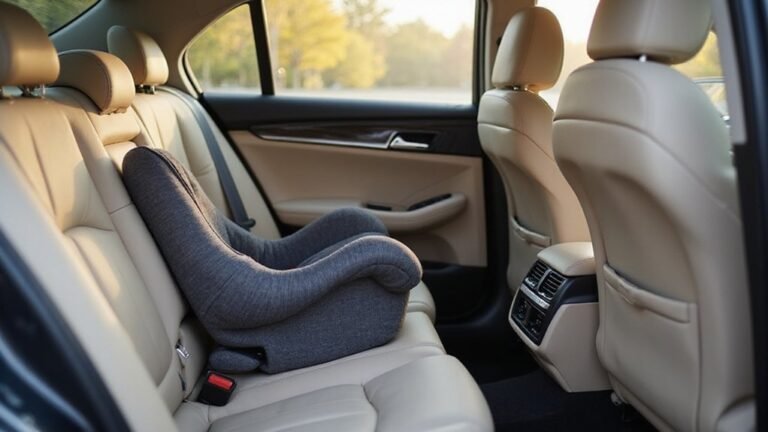


Wondering if you can use a car seat without its base? The quick answer is yes, but only if your car seat manual explicitly states that it’s safe to do so.
Many seats are designed for quick, base-free installation, while others require the base at all times. Knowing your seat’s specific rules is key to ensuring safety and maintaining your warranty.
The rest of this article explains how to identify what’s safe for your seat.
Can You Use a Car Seat Without a Base?
Yes, you can use a car seat without a base, but only if the manufacturer specifically allows it. Always check your car seat’s manual to verify compatibility with baseless installation, as not all models support it. Proper installation is critical—never assume that because a seat can be used without a base, it is safe to do so.
Follow the manufacturer’s instructions exactly. Secure the seat using the vehicle’s seat belt as directed. The seat should not move more than one inch at the belt path when properly installed. Rear-facing and positioned in the back seat are non-negotiable safety requirements. Placing the seat in the center is 43% safer according to a large study, but may be harder to install securely. This is because rear-facing seats better protect a child’s head, neck, and spine by distributing crash forces across the shell. For those seeking a comfortable and secure fit, car seat covers can also enhance the installation experience by preventing slippage.
Incorrect installation can significantly reduce your child’s protection in a crash. The base mainly offers convenience, making installation easier and quicker, but it does not replace proper setup. Baseless options provide flexibility for taxis or rental cars, provided your manual explicitly states it is safe to install without the base. This flexibility mirrors how crib mattresses and twin sizes differ in lifespan and cost, requiring careful manufacturer guidance for proper use. Always double-check and verify that you are following the specific installation instructions for your car seat model.
Which Infant Seats Allow Baseless Installation?
Some infant car seats do allow baseless installation, but the method depends on the model. Seats like the Graco GoMax and Joie Mint Latch feature rigid LATCH arms built directly into the carrier, which attach straight to your vehicle’s lower anchors. The Nuna PIPA urbn operates similarly, but you should confirm that its rigid LATCH system is compatible with your car’s anchor points. Clek’s Liingo uses flexible LATCH, which attaches with straps rather than rigid arms, so it cannot be installed without the base in the traditional sense. Conversely, seats like the Uppababy Aria V2 employ a European belt path, enabling belt installation without a separate base. Whichever seat you choose, always refer to the manufacturer’s instructions to verify if it can be installed without the base, as restrictions vary between models. For baby gear organization, remember that a changing table dresser with drawers can offer versatile storage for nursery essentials. Additionally, if your car seat is nearing its expiration date or shows signs of wear, it should be replaced to ensure safety. Understanding the car seat lifespan helps you plan ahead for safe usage and replacement timing.
The Three Non-Negotiable Safety Checks for a Baseless Setup
The three non-negotiable safety checks for a baseless setup are essential, even if your seat like the Graco GoMax or Nuna PIPA urbn is designed to be installed without a base. First, choose either the vehicle seat belt or the lower anchors for installation—never both at the same time. Using both can compromise safety because it prevents the seat from fitting tightly. Second, the seat must pass the 1-inch movement test; it shouldn’t shift more than one inch side to side or front to back at the belt path. Excess movement indicates your installation isn’t secure enough. Third, verify the correct recline angle, generally between 30 and 45 degrees, to keep your infant’s airway open. An improper angle can lead to breathing difficulties or positional issues. If you prefer a seat designed to grow with your child, an infant car seat should always meet the same basic safety standards outlined here. For an even more convenient feeding solution, you can pair your setup with a reliable bottle warmer that safely heats milk to the ideal temperature. Properly tightening the belt path also helps achieve the sturdy, no-shake fit required for baseless installation.
Meeting these three checks ensures your seat is safely installed, regardless of whether you’re using a base or not. Remember that tightness and proper angle are critical, and if you can’t achieve either, the setup is unsafe. Also, a correctly installed vehicle seat is meaningless if your harness isn’t snug and correctly positioned. Always consult your seat’s manual to confirm these safety standards and avoid shortcuts.
How to Install a Car Seat Without a Base (Step-by-Step)
To install a car seat without a base, rely entirely on the vehicle seat belt. Start by placing the carrier rear-facing on the seat and routing the lap belt through the correct guides. Check your manual for whether your vehicle uses American-style (lap belt across the front near the baby’s legs) or European-style (lap belt through the lower guide, shoulder belt around back) installation.
Before tightening the belt, adjust the seat recline using the carrier’s level line to ensure the proper angle. Buckle the belt securely, then engage the locking mode—often by pulling the shoulder belt fully out if using European-style belts.
To tighten, press your weight into the carrier while pulling on the slack of the belt. Make sure the lap portion stays snug through the guides. Most vehicles manufactured after 1996 have built-in locking mechanisms that activate by fully pulling the belt out and slowly retracting it to create a ratcheting lock. Verify the carrier’s fit by checking that it does not move more than an inch side to side or front to back at the belt path. Also, confirm that the handle is locked into the approved riding position before moving the vehicle. For comparison, a breast pump like the Spectra S1 offers a rechargeable battery for portable use, unlike the Spectra S2 which requires a wall outlet.
Ensure your vehicle’s seat fabric offers enough grip to prevent slippage, as some materials can reduce the belt’s effectiveness. Proper installation is critical for safety, so take your time to double-check every step.
How to Verify Your No-Base Installation Is Tight Enough
To verify your no-base installation is tight enough, check the belt path for secure attachment. Once you’ve locked the belt and pressed the carrier into the seat, do not just eyeball it; perform a physical test at the belt path. Grab the seat right where the belt passes through and give it a firm, handshake-style shake. Aim for less than 1 inch of side-to-side and front-to-back movement. Do not test from the top, as this can exaggerate motion and give a false sense of looseness. If the seat shifts more than an inch, tighten the belt and recheck until it passes the test. Focusing on the belt path is crucial because that’s where restraint is applied. It’s normal to see some wobbling at the top as long as the belt path remains solid; keep rechecking until it feels secure. Additionally, remember that movement near the child’s head can be substantial but is expected and not a safety issue. Using a seat protector can also help prevent damage to vehicle upholstery while maintaining a secure fit. For a more reliable setup, consider using one of the best car seat bases reviewed for enhanced stability and ease of use. To avoid common errors, ensure the belt is not twisted and is routed through the correct belt path as specified in the warmer’s manual for a consistent lock.
Common Mistakes That Make a Baseless Installation Unsafe
Even after passing a belt-path shake test, several common mistakes can still make your baseless car seat unsafe. Incorrect belt routing is a frequent issue, where you thread the vehicle belt through the wrong openings, which reduces crash performance even if the seat feels tight. Ensuring you follow the manufacturer’s instructions for belt routing is crucial to maintain safety. Child seat angles also matter; an improper recline, either too upright or too reclined, affects airway safety. Using the built-in angle guides can help you position the seat correctly for rear-facing installation.
Loose installation remains one of the top risks; the seat should not move more than 1 inch side-to-side or front-to-back at the belt path. Always check for this movement after install. Harness tightness is equally important— straps should be tightened until you cannot pinch any material at the child’s shoulders. Avoid twisting straps or misplacing the chest clip, as both can impair proper restraint during a crash. Additionally, using incorrect attachment sites, like borrowing LATCH connectors from another seat or adding aftermarket pads, compromises the integrity of the installation. Always use the designated anchors and accessories recommended by the manufacturer.
When Your Car Seat Manufacturer Forbids Baseless Use
To determine if your car seat manufacturer forbids baseless use, consult your specific manual first. The manufacturer’s instructions are legally binding and must be followed precisely. If the manual explicitly states “must use base,” then installing the seat without it is prohibited. Using the seat without its base not only violates manufacturer instructions but also undermines the tested safety of the seat. The base isn’t there for convenience or resale value; it’s a critical safety component.
You are required to use the detachable base on every trip unless the manual states otherwise. When installing, you may only use either lower anchors or the seat belt—never both at the same time. Even if you prefer a sleeker cabin or are trying to save space, bypassing the recommended setup is not an option. Compliance is about safety and law, not personal preference. Ignoring these instructions can jeopardize the safety of your child and lead to legal issues if an accident occurs.
Pros and Cons of a Permanent Base vs. Baseless Use
Choosing between a permanent base and baseless use depends on whether you prioritize convenience or flexibility. A permanent base simplifies installation because you install it once, then easily click your carrier in and out. This setup allows for quicker transfers, maintains a consistent recline, and enables sharing the base among caregivers. The durable material withstands daily use and reduces the chance of repeated installation errors. However, it adds bulk and cost, making it less portable and limiting your ability to switch vehicles easily. A permanent base provides a stable, predictable setup, while a nursery rocker or glider offers different benefits for soothing your baby. For parents on the go, a bassinet stroller can provide a similar one-piece convenience without needing to transfer the carrier at all. For additional hygiene, you can also sterilize breast pump parts to keep feeding equipment safe.
With baseless use, you gain the freedom to use the carrier in taxis, rideshares, or multiple cars. The setup is lighter and typically costs less. But each time you install the seat, you must carefully follow the manual and use the seat belt, which increases the installation time and complexity. The carrier’s material durability becomes more significant since the seat itself takes on more wear. Securing the seat without a base can take more time and precision, especially compared to the convenience of a fixed base.
Why Traveling Without a Base Is Often the Smarter Choice
Traveling without a base is often the smarter choice because it offers greater convenience and flexibility. Without a fixed base, you can transition between vehicles more quickly and easily, saving time during short-term transfers. This makes it ideal for travel routines that involve multiple caregivers or spontaneous trips, as you avoid the hassle of relocating or managing multiple bases. Installing a seat directly with a seat belt is straightforward and can be done instantly in emergencies, matching your on-the-go lifestyle.
Additionally, baseless infant seats are lighter and take up less space, making them easier to carry through airports, parking lots, or urban environments. Fewer accessories mean less packing complexity and lower costs, especially if you share transportation with others. Without the need to remember which car has a base, your travel days become smoother and less stressful. This approach reduces bulk and enhances convenience, especially for sporadic or quick trips.
How to Check Your Manual for Baseless Approval
To confirm baseless approval, start by locating the car seat instruction manual—the definitive source on whether your seat can be used without the base. The manual clearly states if installation without the base is permitted, often including instructions for seat belt or lower anchor installation. Look for specific details such as a dedicated lap belt guide and a movement limit of no more than 1 inch at the belt path, which indicates proper securement. If the manual is missing, contact the manufacturer directly to request a copy. Cross-check your vehicle’s owner’s manual for compatibility, as model-specific rules may override general guidance. Verify your seat’s height and weight limits, approved handle positions, and recline options to ensure safe usage. Consider reviewing top crib and dresser sets for additional nursery safety insights, though unrelated to car seats. Similarly, organizing those nursery items in a chest of drawers with multiple drawers can improve storage efficiency and safety in your child’s room. When uncertainty remains, consult a certified child passenger safety technician or the manufacturer to clarify any doubts and avoid safety myths. For example, some top rotating infant car seats are designed by manufacturers to only permit baseless installation under strict conditions outlined in their manuals.