Tag: Parenting tips

  • 10 Best Infant Car Seat and Stroller Combos That Simplify Your Daily Routine

    10 Best Infant Car Seat and Stroller Combos That Simplify Your Daily Routine

    You need a travel system that actually simplifies your life, not one that adds more hassle to your day. The best combos blend safety features like impact protection with seamless car to stroller switches. But which one fits your daily routine best? Let’s break down the top ten options that deliver real convenience.

    Top Infant Car Seat and Stroller Combos

    Safety 1st Smooth Ride Travel System StrollerBest ValueInfant Car Seat Weight Capacity (Rear-Facing): 4-30 lbsStroller Seat Weight Capacity: Up to 50 lbsTravel System Configurations: Travel system (car seat + stroller)VIEW LATEST PRICERead Our Analysis
    Evenflo Shyft Intuiti Revolve180 Travel SystemMost InnovativeInfant Car Seat Weight Capacity (Rear-Facing): 3-30 lbsStroller Seat Weight Capacity: Up to 43 in. heightTravel System Configurations: Multiple modes (infant car seat, toddler seat, lay-flat carriage)VIEW LATEST PRICERead Our Analysis
    Baby Trend EZ Ride Travel System with EZ-Lift™ Infant Car Seat Dash PinkBudget-Friendly PickInfant Car Seat Weight Capacity (Rear-Facing): 4-30 lbsStroller Seat Weight Capacity: Not specifiedTravel System Configurations: Travel system (car seat + stroller)VIEW LATEST PRICERead Our Analysis
    Safety 1st Grow and Go Flex 8-in-1Most VersatileInfant Car Seat Weight Capacity (Rear-Facing): 4-30 lbsStroller Seat Weight Capacity: Up to 50 lbsTravel System Configurations: 8-in-1 (infant carriage, car seat carrier, travel system, toddler stroller)VIEW LATEST PRICERead Our Analysis
    Baby Trend Passport 6-in-1 Stroller Travel SystemBest ModularInfant Car Seat Weight Capacity (Rear-Facing): 4-30 lbs (EZ-Lift PLUS)Stroller Seat Weight Capacity: Not specifiedTravel System Configurations: 6-in-1 (infant car seat, bassinet, toddler seat; parent/forward-facing)VIEW LATEST PRICERead Our Analysis
    Graco Modes Element Travel System with Car SeatBest StarterInfant Car Seat Weight Capacity (Rear-Facing): 4-30 lbs (SnugRide Lite LX)Stroller Seat Weight Capacity: Not specified (infant to toddler)Travel System Configurations: 3-in-1 (infant car seat carrier, infant stroller, toddler stroller)VIEW LATEST PRICERead Our Analysis
    Graco Modes Pramette Travel System (Ellington)Editor’s ChoiceInfant Car Seat Weight Capacity (Rear-Facing): 4-35 lbs (SnugRide 35 Lite DLX)Stroller Seat Weight Capacity: 4-35 lbsTravel System Configurations: 3 modes (infant car seat carrier, infant pramette, toddler stroller)VIEW LATEST PRICERead Our Analysis
    Baby Trend Passport Switch 6-in-1 StrollerBest ConvenienceInfant Car Seat Weight Capacity (Rear-Facing): 4-30 lbs (EZ-Lift PLUS)Stroller Seat Weight Capacity: Not specifiedTravel System Configurations: 6-in-1 (infant car seat, bassinet, toddler seat; parent/forward-facing)VIEW LATEST PRICERead Our Analysis
    Baby Trend EZ Ride Travel System Dash GreyBest ManeuverabilityInfant Car Seat Weight Capacity (Rear-Facing): 4-30 lbs (EZ-Lift)Stroller Seat Weight Capacity: Not specifiedTravel System Configurations: Travel system (car seat + stroller)VIEW LATEST PRICERead Our Analysis
    Doona Car Seat & Stroller Nitro Black – All-in-One Travel SystemAll-in-One BestInfant Car Seat Weight Capacity (Rear-Facing): 4-30 lbsStroller Seat Weight Capacity: Up to 30 lbsTravel System Configurations: All-in-one (car seat converts to stroller)VIEW LATEST PRICERead Our Analysis

    More Details on Our Top Picks

    1. Safety 1st Smooth Ride Travel System Stroller

      If you’re looking for a travel system that offers serious value without sacrificing safety, the Safety 1st Smooth Ride fits the bill. This combo clicks together using QuickClick technology, so you can move your baby from car to stroller in seconds. The OnBoard FLX car seat fits rear facing infants from 4 to 30 pounds. Plus, the stroller holds children up to 50 pounds. You’ll love the extra large canopy with a flip out visor and peek a boo window for easy monitoring. And storage is generous with a large basket plus parent and child trays.

      • Infant Car Seat Weight Capacity (Rear-Facing):4-30 lbs
      • Stroller Seat Weight Capacity:Up to 50 lbs
      • Travel System Configurations:Travel system (car seat + stroller)
      • Canopy Features:Extra-large with flip-out visor, peek-a-boo window
      • Harness Type:5-point harness (4 adjustable height positions)
      • Fold Mechanism:Lift-to-fold, stands when folded
      • Additional Feature:Flip-flop friendly brakes
      • Additional Feature:Extra-large canopy with visor
      • Additional Feature:QuickClick car seat attachment
    2. Evenflo Shyft Intuiti Revolve180 Travel System

      Most Innovative

      View Latest Price

      This travel system is the best choice for parents who want maximum versatility from day one. You get three modes in one stroller: infant car seat, toddler seat, and lay-flat carriage. That’s adaptability without buying extra gear.

      The Revolve180 car seat rotates 180 degrees with one hand, so you’re not twisting your back to load your little one. Its LockStrong belt system makes installation quick and secure, too. For the stroller, all-wheel suspension and rubber tires absorb bumps across varied terrain. You can face your child toward you or the world. Plus, the UPF 50+ canopy adjusts height as they grow. Evenflo’s ParentLink team offers live video support if you need installation help.

      • Infant Car Seat Weight Capacity (Rear-Facing):3-30 lbs
      • Stroller Seat Weight Capacity:Up to 43 in. height
      • Travel System Configurations:Multiple modes (infant car seat, toddler seat, lay-flat carriage)
      • Canopy Features:UPF 50+, height-adjustable
      • Harness Type:5-point harness (not specified further)
      • Fold Mechanism:Not specified
      • Additional Feature:One-hand 180° rotation seat
      • Additional Feature:All-wheel suspension system
      • Additional Feature:Live video support for installation
    3. Baby Trend EZ Ride Travel System with EZ-Lift™ Infant Car Seat Dash Pink

      Budget-Friendly Pick

      View Latest Price

      The Baby Trend EZ Ride Travel System is the best choice for budget conscious parents who want a reliable, all in one solution without the premium price tag. You get a 3 wheel stroller that maneuvers like a dream, with a large canopy and that handy Peek-A-Boo window. The padded seat reclines, and both you and your child get cup holders. Seriously, the parent tray holds your coffee. For the car seat, the EZ-Lift has ergonomic side grips, so carrying your 4 to 30 pound baby feels balanced. Higher side wings and EPS foam mean solid side impact protection. Installing the base? Use LATCH clips or the seat belt, whichever is easier.

      • Infant Car Seat Weight Capacity (Rear-Facing):4-30 lbs
      • Stroller Seat Weight Capacity:Not specified
      • Travel System Configurations:Travel system (car seat + stroller)
      • Canopy Features:Large canopy with peek-a-boo window
      • Harness Type:5-point harness with padded shoulder strap covers
      • Fold Mechanism:Foldable design (compact storage)
      • Additional Feature:3-wheel design for maneuverability
      • Additional Feature:Ergonomic Side Grip carrying
      • Additional Feature:Adjustable handle height
    4. Safety 1st Grow and Go Flex 8-in-1

      Most Versatile

      View Latest Price

      You get the most versatility with the Safety 1st Grow and Go Flex 8-in-1 Travel System. It gives you eight strolling options, including Infant Carriage and Toddler Stroller, all reversible for forward or rear facing. The car seat clicks directly onto the frame, no adapters needed, supporting babies from 4 to 30 pounds. The stroller seat handles up to 50 pounds, with a step up bar for easy climbing. You’ll love the lightweight frame (under 8 pounds) and the one hand fold that stands on its own. The large canopy with a peek a boo window and extra big storage basket make outings effortless. Cozy knit cushions keep even the tiniest traveler snug!

      • Infant Car Seat Weight Capacity (Rear-Facing):4-30 lbs
      • Stroller Seat Weight Capacity:Up to 50 lbs
      • Travel System Configurations:8-in-1 (infant carriage, car seat carrier, travel system, toddler stroller)
      • Canopy Features:Large zip-extend canopy with peek-a-boo window
      • Harness Type:5-point harness (car seat)
      • Fold Mechanism:1-hand folding, self-standing
      • Additional Feature:Self-standing one-hand fold
      • Additional Feature:Cozy knit cushions for infants
      • Additional Feature:Zip-extend canopy with window
    5. Baby Trend Passport 6-in-1 Stroller Travel System

      Best Modular

      View Latest Price

      Modular travel systems don’t get more adaptable than this one. You’ll switch between six modes as your baby grows: face you or forward for the car seat, bassinet, or toddler seat. The EZ-Lift PLUS car seat has a built in side grip for easy carrying, plus its handlebar flips into an anti-rebound bar for extra safety. You won’t struggle with installation thanks to the bubble level and No-Twist Harness Indicator on the base. And the flip-flop friendly brakes mean you can stop smoothly even in sandals. The centrally located phone holder and flex grip cup holder keep your essentials handy, while the oversized storage basket gives you room for diaper bags and toys.

      • Infant Car Seat Weight Capacity (Rear-Facing):4-30 lbs (EZ-Lift PLUS)
      • Stroller Seat Weight Capacity:Not specified
      • Travel System Configurations:6-in-1 (infant car seat, bassinet, toddler seat; parent/forward-facing)
      • Canopy Features:Not specified
      • Harness Type:5-point harness (car seat)
      • Fold Mechanism:Not specified
      • Additional Feature:Anti-rebound bar from handlebar
      • Additional Feature:Central phone holder included
      • Additional Feature:No-Twist Harness Indicator
    6. Graco Modes Element Travel System with Car Seat

      Best Starter

      View Latest Price

      If you’re a new parent seeking a travel system that truly grows with your child, the Graco Modes Element is a smart, starter-friendly option. Its 3-in-1 design converts from an infant car seat carrier to an infant stroller, then to a toddler stroller—so you’re set from day one to around age three. The reversible seat lets baby face you or the world, adapting as they get curious.

      It comes with the SnugRide Lite LX infant car seat (fits infants 4 to 30 pounds), so you just click them from car to stroller without waking them. You’ll love the parent tray with cup holders for your coffee, plus a child tray with removable cup holders for snacks. The large storage basket holds diapers, bags, or groceries. And when you’re done, the self-standing fold makes storage a breeze—perfect for tight trunks or hall closets. It’s a practical gift for new parents, too!

      • Infant Car Seat Weight Capacity (Rear-Facing):4-30 lbs (SnugRide Lite LX)
      • Stroller Seat Weight Capacity:Not specified (infant to toddler)
      • Travel System Configurations:3-in-1 (infant car seat carrier, infant stroller, toddler stroller)
      • Canopy Features:Not specified
      • Harness Type:5-point harness (car seat)
      • Fold Mechanism:Self-standing fold
      • Additional Feature:Self-standing fold design
      • Additional Feature:Reversible stroller seat
      • Additional Feature:Removable child tray cup holders
    7. Graco Modes Pramette Travel System (Ellington)

      Editor’s Choice

      View Latest Price

      Graco Modes Pramette Travel System (Ellington) is our editor’s choice for ultimate versatility. You get three configurations in one: Infant Car Seat Carrier, Infant Pramette, and Toddler Stroller. It handles babies from 4 to 35 pounds, so it grows right with your child.

      The reversible seat lets your little one face you or the world. You’ll love the large canopy with peekaboo window for shade and visibility. Plus, you get a removable child’s tray with cup holders, plus a parent cup holder and phone holder.

      This system includes the Graco SnugRide 35 Lite DLX Infant Car Seat, rear facing for infants from 4 pounds up to 35 pounds. And the one hand fold makes storage and transport a breeze!

      • Infant Car Seat Weight Capacity (Rear-Facing):4-35 lbs (SnugRide 35 Lite DLX)
      • Stroller Seat Weight Capacity:4-35 lbs
      • Travel System Configurations:3 modes (infant car seat carrier, infant pramette, toddler stroller)
      • Canopy Features:Large canopy with peekaboo window
      • Harness Type:5-point harness (car seat)
      • Fold Mechanism:One-hand fold
      • Additional Feature:Baby pramette mode for newborns
      • Additional Feature:Parent phone holder included
      • Additional Feature:One-hand fold mechanism
    8. Baby Trend Passport Switch 6-in-1 Stroller

      Best Convenience

      View Latest Price

      You want a travel system that adapts to your day without the hassle. The Baby Trend Passport Switch 6-in-1 hits that mark with six modes: infant car seat, bassinet, or toddler seat, each facing you or forward. You’ll flip the car seat handlebar into an anti-rebound bar for extra safety when facing forward, and the built-in side grip makes carrying ergonomic.

      Convenience is baked in. You get a central phone holder, a flex-grip cup holder that handles big bottles, and a large basket with front and rear openings for quick access. Flip-flop friendly brakes let you stop smoothly.

      The EZ-Lift base includes a bubble level indicator and No-Twist Harness Indicator, so you’ll confirm proper strap tension fast. Made of lightweight polyester, it’s practical, safe, and ready for your routine.

      • Infant Car Seat Weight Capacity (Rear-Facing):4-30 lbs (EZ-Lift PLUS)
      • Stroller Seat Weight Capacity:Not specified
      • Travel System Configurations:6-in-1 (infant car seat, bassinet, toddler seat; parent/forward-facing)
      • Canopy Features:Not specified
      • Harness Type:5-point harness (car seat)
      • Fold Mechanism:Not specified
      • Additional Feature:Flex-grip cup holder for large bottles
      • Additional Feature:Flip foot on car seat base
      • Additional Feature:Front and rear basket access
    9. Baby Trend EZ Ride Travel System Dash Grey

      Best Maneuverability

      View Latest Price

      The Baby Trend EZ Ride Travel System in Dash Grey is the pick for parents who prize maneuverability. Its 3-wheel stroller design lets you navigate tight aisles and crowded sidewalks with ease. You get:

      • Complete safety: Both the EZ-Lift infant car seat (holding newborns 4 to 30 pounds) and stroller feature 5-point harnesses, deep side wings, and EPS foam for impact protection. Install the car seat with LATCH clips or a seat belt.
      • Parent + child convenience: Deluxe parent tray with two cup holders and center storage, plus a swing-away child tray with its own cup holders. The large storage basket swallows diaper bags and groceries.
      • Comfort tweaks: Padded stroller seat offers multiple recline positions, and the height-adjustable handle fits parents of all sizes. The canopy includes a peek-a-boo window so you can glance at your little one. And when you’re done, just fold it for compact storage.
      • Infant Car Seat Weight Capacity (Rear-Facing):4-30 lbs (EZ-Lift)
      • Stroller Seat Weight Capacity:Not specified
      • Travel System Configurations:Travel system (car seat + stroller)
      • Canopy Features:Canopy with peek-a-boo window
      • Harness Type:5-point harness (both stroller and car seat)
      • Fold Mechanism:Foldable design
      • Additional Feature:3-wheel maneuverability design
      • Additional Feature:EPS foam side impact protection
      • Additional Feature:Height-adjustable handle
    10. Doona Car Seat & Stroller Nitro Black – All-in-One Travel System

      All-in-One Best

      View Latest Price

      Stop wrestling with a bulky travel system. The Doona Car Seat & Stroller, Nitro Black instantly transforms from car seat to stroller with a single click. No waking your sleeping baby. No juggling heavy pieces. It’s an all-in-one carrier, stroller, and rear-facing car seat for infants 4 to 30 pounds.

      You get serious safety here: 3 layer side impact protection, anti rebound crash technology, and a 5 point harness. The ergonomic insert supports your newborn’s spine. At just 17.2 pounds, it’s lightweight. Plus, the canopy repels water and blocks UPF 50+ sun. It’s FAA compliant for travel, too. Simple, safe, seamless.

      • Infant Car Seat Weight Capacity (Rear-Facing):4-30 lbs
      • Stroller Seat Weight Capacity:Up to 30 lbs
      • Travel System Configurations:All-in-one (car seat converts to stroller)
      • Canopy Features:Water-repellant canopy with UPF 50+
      • Harness Type:5-point safety harness
      • Fold Mechanism:One-click transformation (car seat to stroller)
      • Additional Feature:One-click car seat to stroller
      • Additional Feature:3-layer side impact protection
      • Additional Feature:FAA and TUV aircraft certified

    Factors to Consider When Choosing an Infant Car Seat With Stroller Combo
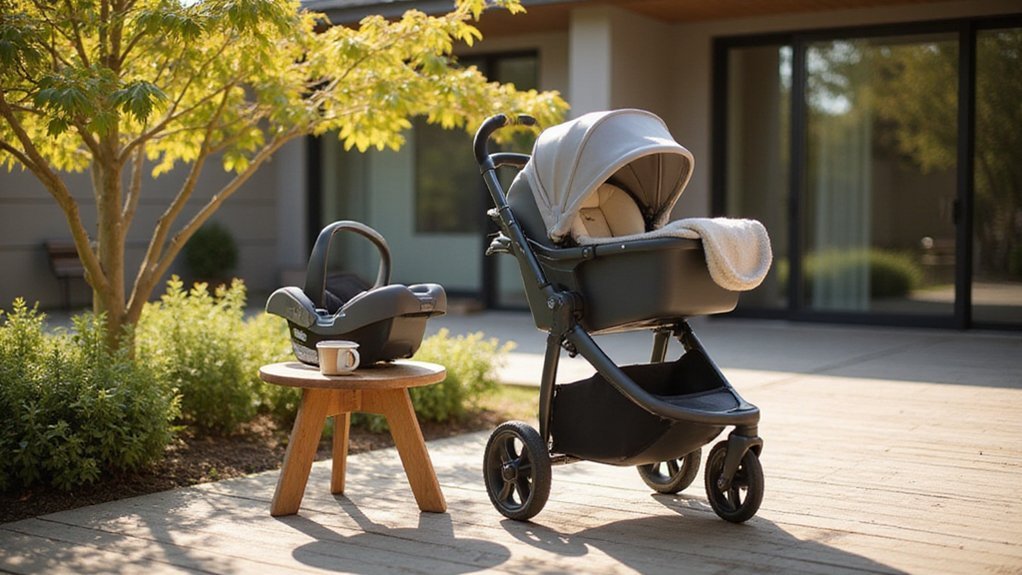
    You need to carefully evaluate safety standards first, always looking for JPMA certification and those rigorous side impact tests. And you can’t skip the compatibility check between the car seat and stroller, as even top rated systems can have frustrating fit issues. Finally, consider the car seat weight limits and stroller maneuverability together, along with those storage essentials for diaper bags and coffee.

    Safety Standards

    When it comes to your baby’s safety, two key certifications should be your starting point: FMVSS 213 in the U.S. or i-Size (ECE R129) in Europe. Both set rigorous crash standards, so look for those labels on the car seat’s base. You’ll also want side impact protection, like energy absorbing foam and reinforced side wings, which cushion your baby during collisions. Don’t underestimate the harness system either. It needs to be adjustable, secure, and easy to tighten properly. But even the best gear fails without correct installation, so choose a system with clear installation indicators and straightforward instructions. These features aren’t just nice to have. They’re non-negotiable for keeping your little one safe on every ride.

    Compatibility Check

    Settling on a car seat and stroller combo that meets safety standards is only half the battle. You absolutely need to guarantee they’re actually compatible. First, check that the car seat fits your vehicle’s anchor system, whether that’s LATCH or a seat belt. An incompatible fit means no safe installation. Next, verify the stroller accommodates the infant seat’s dimensions. Weight and height limits matter here. You don’t want a struggle every time you snap it in. Ideally, the seat clicks into the stroller without extra adapters. That effortless action? It’s a lifesaver on busy mornings. Finally, confirm the whole system meets compatibility requirements. It’s about seamless, secure transitions. Get these details right, and you’ve built a daily routine that actually simplifies life.

    Car Seat Weight Limits

    The weight limit on an infant car seat isn’t just a number; it’s the key factor dictating how long your child can safely ride in it. Most models cap out between 4 and 35 pounds, so you’ll want to check the manufacturer’s specific capacity for your combo. For instance, many seats support rear facing use up to 30 pounds, which is essential since that’s the safest position for your little one. Exceeding that maximum weight limit compromises safety and performance, plain and simple. That’s why you need to think ahead: a higher limit means you get more time before switching to a convertible seat. Here’s what to look for:

    • Weight range: Confirm it covers your child’s expected growth.
    • Rear facing limit: Prioritize higher numbers for longer protection.
    • Stated maximum: Never exceed it; it’s a hard safety boundary.

    Stroller Maneuverability

    Four key factors determine how easily you’ll push this combo through daily life. First, lightweight construction and responsive handling let you zip through tight spaces without a fight. Second, look for swivel or lockable front wheels. You’ll want that flexibility to pivot smoothly in crowded aisles, then lock them for straight strides. Third, all-wheel suspension or shock absorption keeps the ride comfy for your child and gives you steadier control over bumpy sidewalks. Finally, large, sturdy wheels with durable rubber tires grip various terrains, from gravel to grass, without dragging.

    Prioritize these for effortless navigation:

    • Lightweight frame
    • Swivel/lockable front wheels
    • All-wheel suspension
    • Large rubber tires

    Plus, a compact, standing fold design means you’re not wrestling with a bulky frame that compromises handling. Choose wisely, and you’ll glide through your day!

    Storage & Convenience

    Before you even think about which stroller handles like a dream, let’s talk about storage and convenience, because no one wants to carry a diaper bag on their shoulder while pushing a stroller. You need a combo that does the heavy lifting literally.

    Look for models with these must have features:

    • Large storage baskets that fit a week’s worth of groceries or a diaper bag, plus your jacket.
    • Parent and child trays with cup holders and snack compartments within easy reach, so you’re never fumbling for your keys or their sippy cup.
    • Accessible compartments that keep wipes and toys handy, not buried at the bottom.

    Prioritize systems with ample, easy to access storage. This eliminates the need for extra bags and cuts clutter. And you’ll appreciate a lightweight frame for quick trips, even if you aren’t folding it yet. Make convenience work for you, not the other way around.

    Fold & Portability

    How much does your sanity weigh when you’re wrestling a stroller through a crowded parking lot or up a narrow apartment stairwell? You want a combo that folds as effortlessly as you breathe. Look for a self-standing fold; it’s a lifesaver in tight car trunks or closets because it won’t topple over. One hand operation is key, so you can collapse the stroller while holding your baby or your coffee. A lightweight, compact design makes transport a breeze, not a burden. Many portable models feature a freestanding frame when folded, and some even have removable seats or collapsible components. This isn’t just about storage, it’s about keeping your daily routine smooth and stress free!

    Systems Growth Adaptability

    Since your baby will outgrow that infant carrier faster than you expect, you need a system that actually grows with them. Look for a travel system with adjustable components to accommodate your child’s journey from newborn to toddler. The stroller should offer multiple seating configurations: infant carrier, forward facing, and rear facing options. Check that the car seat and stroller support weight limits matching your child’s developmental stages. You’ll want features like a multi position recline and height adjustable handles to adapt to their changing size. Opt for modular designs or reversible seats, so you can switch modes seamlessly. And don’t forget: verify that everything feels solid and intuitive, because a system that grows with them saves you from buying another stroller down the road. That’s smart planning!

  • 10 Best Strollers That Newborns (And Parents) Actually Love

    10 Best Strollers That Newborns (And Parents) Actually Love

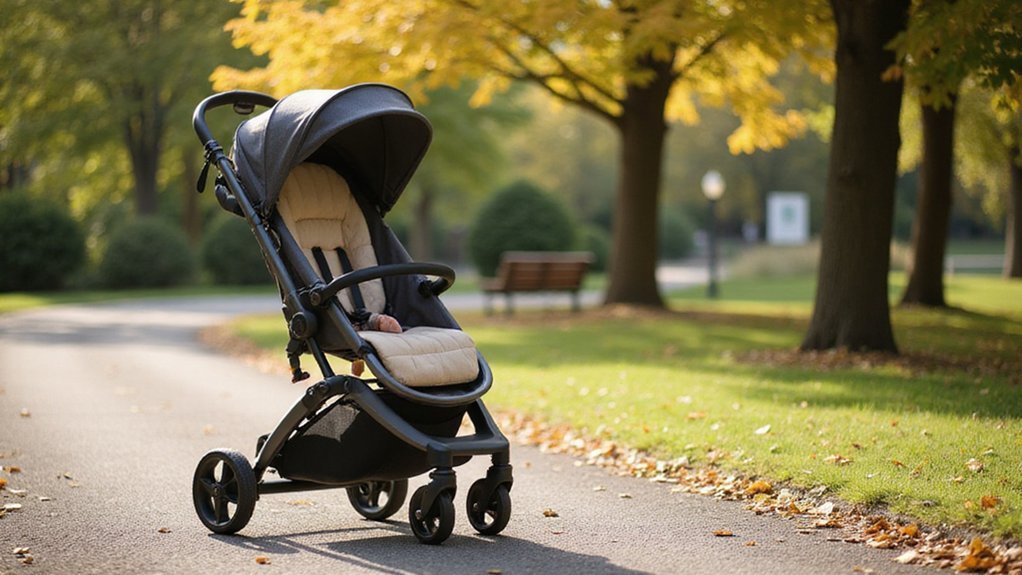
    You’re about to become a stroller expert, and here’s the secret: the best ones for your newborn are also the ones you’ll actually enjoy pushing. That means convertible seats, one hand folds, and real suspension. But not every “2 in 1” delivers on its promises. So we’ve narrowed down ten models that balance safety, storage, and smooth rides. Ready to find yours?

    Best Stroller Picks

    Lortsybab 2 in 1 Convertible Baby StrollerBest All-in-OneConvertible/2-in-1 Design: 2-in-1 convertibleReversible/Facing Seat Option: Yes, reversible seatingSafety Harness Type: 5-point safety beltVIEW LATEST PRICERead Our Analysis
    Baby Trend Snap N Go EX Car Seat CarrierMost PortableConvertible/2-in-1 Design: Car seat carrier onlyReversible/Facing Seat Option: No (car seat only)Safety Harness Type: Adjustable straps + securing strapVIEW LATEST PRICERead Our Analysis
    Mompush Wiz 2-in-1 Bassinet Stroller Reversible SeatMost ManeuverableConvertible/2-in-1 Design: 2-in-1 bassinet strollerReversible/Facing Seat Option: Yes, reversible seatSafety Harness Type: Not specifiedVIEW LATEST PRICERead Our Analysis
    Graco Modes Pramette 3-in-1 Stroller RedmondBest ValueConvertible/2-in-1 Design: 3-in-1 (car seat, pramette, toddler)Reversible/Facing Seat Option: Yes, reversible seatSafety Harness Type: Not specifiedVIEW LATEST PRICERead Our Analysis
    Lortsybab 2-in-1 Convertible Baby Stroller (Beige)Best OverallConvertible/2-in-1 Design: 2-in-1 convertibleReversible/Facing Seat Option: Yes, reversible carriageSafety Harness Type: 5-point safety beltVIEW LATEST PRICERead Our Analysis
    Baby Trend EZ Ride Travel System with EZ-Lift™ Infant Car Seat Dash PinkTravel System PickConvertible/2-in-1 Design: Travel system (stroller + car seat)Reversible/Facing Seat Option: No (fixed forward)Safety Harness Type: 5-point harness (both stroller and car seat)VIEW LATEST PRICERead Our Analysis
    Accombe 2-in-1 Convertible Baby StrollerBest for TerrainConvertible/2-in-1 Design: 2-in-1 (seat and bassinet)Reversible/Facing Seat Option: Yes, reversible bassinetSafety Harness Type: 5-point safety beltVIEW LATEST PRICERead Our Analysis
    2 in 1 Foldable Newborn & Toddler StrollerMost StableConvertible/2-in-1 Design: 2-in-1 (stroller and bassinet)Reversible/Facing Seat Option: Yes, high landscape orientationSafety Harness Type: 5-point safety beltVIEW LATEST PRICERead Our Analysis
    Baby Stroller 2-in-1 Foldable with CanopyBest Sun ProtectionConvertible/2-in-1 Design: 2-in-1 reversibleReversible/Facing Seat Option: Yes, reversible basket pramSafety Harness Type: 5-point harness systemVIEW LATEST PRICERead Our Analysis
    2 in 1 Foldable Baby Stroller with CanopyLightweight PickConvertible/2-in-1 Design: 2-in-1 convertibleReversible/Facing Seat Option: Yes, forward or parent-facingSafety Harness Type: 5-point safety beltVIEW LATEST PRICERead Our Analysis

    More Details on Our Top Picks

    1. Lortsybab 2 in 1 Convertible Baby Stroller

      Best All-in-One

      View Latest Price

      New parents deserve one stroller that handles every stage, and the Lortsybab 2 in 1 Convertible is that single solution from day one to age three. You’ll love the reversible seat: face baby toward you for bonding, then outward when they’re curious. The multi-position recline lets your newborn nap flat or sit upright later. A canopy with sun visors blocks UV rays, while breathable mesh and a zippered foot cover keep your child cool or warm. And with 12-inch rear wheels and front wheel suspension, you get a smooth ride on any terrain. For safety, you’ve got a 5-point harness, a wrist strap, and a one-touch parking brake. Plus, it folds compactly for storage, with an extra-large basket for your diaper bag. Perfect from birth through 36 months!

      • Convertible/2-in-1 Design:2-in-1 convertible
      • Reversible/Facing Seat Option:Yes, reversible seating
      • Safety Harness Type:5-point safety belt
      • Foldable/Compact Design:Quick compact fold
      • Canopy/Sun Protection:Canopy with sun visors, UV protection
      • Wheel Suspension/Shock Absorption:Front wheel suspension with dual springs
      • Additional Feature:Leather handrail
      • Additional Feature:12-inch rear wheels
      • Additional Feature:Wrist strap for caregiver
    2. Baby Trend Snap N Go EX Car Seat Carrier

      Most Portable

      View Latest Price

      If you’re steering early parenthood on the go, the Baby Trend Snap N Go EX is your most portable partner. It transforms your infant car seat into a stroller instantly, no need to wake your baby. You’ll appreciate its one-hand folding feature, making storage a breeze. And the 45-pound weight limit means you get more use than most carriers offer.

      Safety is solid with foot-activated rear brakes and adjustable straps that cradle the seat securely. For you? A parent tray with two cup holders and a covered compartment keeps coffee and keys handy. It’s lightweight polyester, foldable, and travel ready. Simple, smart, and seriously convenient.

      • Convertible/2-in-1 Design:Car seat carrier only
      • Reversible/Facing Seat Option:No (car seat only)
      • Safety Harness Type:Adjustable straps + securing strap
      • Foldable/Compact Design:One-hand folding, compact
      • Canopy/Sun Protection:Not specified
      • Wheel Suspension/Shock Absorption:Not specified
      • Additional Feature:45 lb weight limit
      • Additional Feature:One-hand folding
      • Additional Feature:Parent tray with cup holders
    3. Mompush Wiz 2-in-1 Bassinet Stroller Reversible Seat

      Most Maneuverable

      View Latest Price

      For parents who value both versatility and a smooth ride from day one, the Mompush Wiz is your best bet. This 2-in-1 system transforms from a newborn carriage to an infant pramette, so your baby sleeps soundly on the go. You can reverse the seat for parent facing reassurance or outward facing stimulation, depending on their mood.

      The luxury wheels glide 360 degrees with advanced suspension, and the faux leather handle gives you extra grip. You’ll love the one hand fold for compact storage, plus the generous under seat basket holds all your essentials. The zip out UPF 50+ canopy with ventilation panels and included foot cover keep your little one protected, rain or shine. And it’s compatible with Maxi Cosi and Nuna car seats, with an adapter sold separately.

      • Convertible/2-in-1 Design:2-in-1 bassinet stroller
      • Reversible/Facing Seat Option:Yes, reversible seat
      • Safety Harness Type:Not specified
      • Foldable/Compact Design:Space-saving one-hand fold
      • Canopy/Sun Protection:Zip-out UPF 50+ canopy
      • Wheel Suspension/Shock Absorption:Advanced suspension
      • Additional Feature:Faux leather handle
      • Additional Feature:Maxi-Cosi/Nuna car seat compatible
      • Additional Feature:Zip-out UPF 50+ canopy
    4. Graco Modes Pramette 3-in-1 Stroller Redmond

      The Graco Modes Pramette 3-in-1 Stroller, Redmond is a smart choice for parents who want one unit to carry them from birth through toddler years without buying separate gear. You get three modes: an infant pramette, a car seat carrier (compatible with all Graco infant seats, sold separately), and a toddler stroller. The reversible seat lets your baby face you for bonding or the world for curiosity.

      You’ll love the one-hand fold for quick storage and the large canopy with a peekaboo window. Your convenience matters too: cup holder and phone holder are included. Plus, the removable child’s tray with cup holders makes snack time easy. It’s a versatile, stylish solution in premium Oxford cloth.

      • Convertible/2-in-1 Design:3-in-1 (car seat, pramette, toddler)
      • Reversible/Facing Seat Option:Yes, reversible seat
      • Safety Harness Type:Not specified
      • Foldable/Compact Design:One-hand fold design
      • Canopy/Sun Protection:Large canopy with peekaboo window
      • Wheel Suspension/Shock Absorption:Not specified
      • Additional Feature:Premium Oxford cloth
      • Additional Feature:Child’s tray with cup holders
      • Additional Feature:Parent phone holder
    5. Lortsybab 2-in-1 Convertible Baby Stroller (Beige)

      Best Overall

      View Latest Price

      Lortsybab 2-in-1 Convertible Baby Stroller (Beige) stands out as a strong overall choice for newborns. You’ll love the reversible carriage: face baby toward you for bonding or outward for exploration. The multi-position recline lets them nap flat or sit upright to watch the world.

      Safety comes first with a five-point harness, wrist strap, and one-touch parking brake. Front wheels rotate 360° or lock for stability, while dual springs smooth out rough terrain. The canopy adapts to weather with a breathable mesh and zippered foot cover. Plus, the quick compact fold and giant storage basket make your life easier. It’s a durable, thoughtful gift for baby’s first three years.

      • Convertible/2-in-1 Design:2-in-1 convertible
      • Reversible/Facing Seat Option:Yes, reversible carriage
      • Safety Harness Type:5-point safety belt
      • Foldable/Compact Design:Quick compact fold
      • Canopy/Sun Protection:Canopy with sun visors
      • Wheel Suspension/Shock Absorption:Front wheel suspension with dual springs
      • Additional Feature:Leather handrail
      • Additional Feature:12-inch rear wheels
      • Additional Feature:Wrist strap for caregiver
    6. Baby Trend EZ Ride Travel System with EZ-Lift™ Infant Car Seat Dash Pink

      Travel System Pick

      View Latest Price

      New parents juggling a newborn’s constant needs will find this travel system pick a true lifesaver. You get both a stroller and an infant car seat, so you’re ready from day one. The 3 wheel design makes maneuvering tight corners a breeze, and the large canopy with a Peek-A-Boo window keeps your baby shaded while you check on them. Your child’s comfort is key: the padded seat offers multiple recline positions, and the swing away child tray has two big cup holders.

      The EZ Lift car seat is a standout. Its ergonomic Side Grip lets you carry it easily, and the deeper side wings with EPS foam give serious side impact protection. Installation is flexible, too: use LATCH clips or the seat belt. Plus, the 100% polyester construction is durable and simple to clean.

      • Convertible/2-in-1 Design:Travel system (stroller + car seat)
      • Reversible/Facing Seat Option:No (fixed forward)
      • Safety Harness Type:5-point harness (both stroller and car seat)
      • Foldable/Compact Design:Not specified
      • Canopy/Sun Protection:Large canopy with Peek-A-Boo window
      • Wheel Suspension/Shock Absorption:Not specified
      • Additional Feature:3-wheel design
      • Additional Feature:Adjustable handle height
      • Additional Feature:LATCH or seat belt installation
    7. Accombe 2-in-1 Convertible Baby Stroller

      Best for Terrain

      View Latest Price

      If you’re tackling rough sidewalks or grassy paths, this stroller handles it like a champ. Its large PU wheels and shock absorbing springs smooth out bumps, giving your baby a comfy ride. You’ll love the convertible design: it works as a bassinet with a ventilated net and skylight, then flips to a toddler seat with an adjustable backrest. The sturdy alloy frame feels solid. Plus, you get:

      • A 5-point safety belt and one foot brake for security
      • A UV blocking canopy with multiple positions
      • Plenty of storage with a basket underneath and a bag behind the seat

      Compact fold makes storage a breeze.

      • Convertible/2-in-1 Design:2-in-1 (seat and bassinet)
      • Reversible/Facing Seat Option:Yes, reversible bassinet
      • Safety Harness Type:5-point safety belt
      • Foldable/Compact Design:Compact fold design
      • Canopy/Sun Protection:Adjustable canopy, UV protection
      • Wheel Suspension/Shock Absorption:Shock-absorbing springs, large PU wheels
      • Additional Feature:Detachable armrest
      • Additional Feature:Adjustable handlebar height
      • Additional Feature:Sturdy alloy frame
    8. 2 in 1 Foldable Newborn & Toddler Stroller

      This 2-in-1 stroller is your most stable option for a convertible design. It works as both a bassinet and a toddler seat, letting you adjust the sleeping basket to a full lie-down, half-lying, or sitting angle. The high landscape position lifts your baby above car exhaust, giving them a clear view out and you peace of mind.

      What you’ll appreciate:

      • Shade on demand: The Lycra canopy blocks UV rays while remaining breathable.
      • Serious shock absorption: Front spring suspension plus rear double damping makes bumpy sidewalks feel smooth.
      • One-hand fold: Unfold and collapse it without tools, even while holding your little one.
      • Steel frame: At 45 pounds, the high-carbon steel build feels reassuringly solid.

      The five-point harness keeps safety locked in, but the real win is the ride quality. You won’t dread uneven terrain. You’ll just stroll over it, confident and calm, with a sleeping baby in tow.

      • Convertible/2-in-1 Design:2-in-1 (stroller and bassinet)
      • Reversible/Facing Seat Option:Yes, high landscape orientation
      • Safety Harness Type:5-point safety belt
      • Foldable/Compact Design:One-hand fold/unfold
      • Canopy/Sun Protection:Lycra fabric canopy, UV protection
      • Wheel Suspension/Shock Absorption:Front spring suspension, rear double damping
      • Additional Feature:High-carbon steel frame
      • Additional Feature:45-pound weight
      • Additional Feature:No-tools assembly
    9. Baby Stroller 2-in-1 Foldable with Canopy

      Best Sun Protection

      View Latest Price

      Why would you compromise on your newborn’s comfort and sun safety? This 2-in-1 stroller doesn’t make you choose. You get a soft bassinet with footrest for support, plus a reversible seat for face-to-face bonding. The adjustable handlebar fits you perfectly, at four different heights.

      Its high-density linen fabric feels gentle against your baby’s skin, while the cushion and foot cover add warmth when needed. Safety comes first with a 5-point harness and one-foot brake that stops quickly. The UPF50+ canopy includes a skylight for airflow and visibility.

      All-terrain EVA wheels with suspension absorb shocks, making outdoor walks smooth. A massive 20 x 15.5 x 9-inch storage basket holds everything. Fold it flat for easy carrying.

      • Convertible/2-in-1 Design:2-in-1 reversible
      • Reversible/Facing Seat Option:Yes, reversible basket pram
      • Safety Harness Type:5-point harness system
      • Foldable/Compact Design:Foldable design
      • Canopy/Sun Protection:Adjustable UPF50+ canopy with skylight
      • Wheel Suspension/Shock Absorption:EVA wheels with suspension shock absorbers
      • Additional Feature:High-purity aluminum alloy frame
      • Additional Feature:EVA wheels with suspension
      • Additional Feature:4-position adjustable handlebar
    10. 2 in 1 Foldable Baby Stroller with Canopy

      Lightweight Pick

      View Latest Price

      For new parents who need a stroller that grows with your baby without taking over your trunk, this 2 in 1 Foldable Baby Stroller is your lightweight pick. Weighing just 20 pounds with a high-carbon steel frame, it maneuvers easily while keeping things durable. You can switch the seat to face you or forward, and the sleeping basket adjusts to multiple angles including flat for naps.

      • The Lycra canopy offers UV protection and ventilation, keeping your baby comfortable in changing weather.
      • Safety isn’t an afterthought: front spring suspension and rear double damping smooth out rough terrain, while the five-point belt keeps your little one secure.

      And yes, it folds compactly for transport. Simple, smart, and ready for daily walks!

      • Convertible/2-in-1 Design:2-in-1 convertible
      • Reversible/Facing Seat Option:Yes, forward or parent-facing
      • Safety Harness Type:5-point safety belt
      • Foldable/Compact Design:Foldable pushchair
      • Canopy/Sun Protection:Lycra canopy with UV protection
      • Wheel Suspension/Shock Absorption:Front spring suspension, rear double damping
      • Additional Feature:High-carbon steel frame
      • Additional Feature:20-pound weight
      • Additional Feature:Oxford fabric construction

    Factors to Consider When Choosing Stroller for Newborn

    You need a stroller that meets strict safety standards, so always check for a sturdy five point harness and a reliable brake system. Think about versatility and growth, because a seat that reclines flat for newborns and then adjusts as they sit up saves you from buying another stroller later. And don’t overlook maneuverability and terrain, storage and portability, plus comfort and convenience, all of which shape your daily ease, like handling tight store aisles or hauling a heavy basket up stairs.

    Safety Standards

    Since your newborn’s safety is non-negotiable, start by confirming the stroller meets recognized standards like ASTM F833-21. That label means it’s passed rigorous safety checks, so you can trust the build.

    Next, you’ll want a secure five-point harness****. This clips over both shoulders, around the waist, and between the legs, keeping your little one snugly in place. No slipping around on bumpy sidewalks!

    Check the parking brake too. You need a one-touch or foot-activated system that locks instantly, especially on any incline. And don’t overlook the wrist strap; it’s a simple feature but prevents accidental rollaways if your hand slips.

    Finally, inspect the frame and locking mechanisms. Sturdy materials and parts that click firmly shut ensure the whole structure stays solid. You’ve got this, safety first always gives you peace of mind

    Versatility & Growth

    While your newborn’s immediate safety is locked in, you’ll also want a stroller that grows with them. Look for models with adjustable seats and multiple recline positions, so your baby’s comfort evolves as they do. Convertible options are key: a stroller that transforms from a bassinet to a toddler seat saves you from buying a whole new one later. Reversible seats let you face your baby inward for bonding, then outward as they get curious about the world. Multi-position recline and adjustable footrests support their changing posture, whether they’re napping or sitting up. And don’t forget car seat compatibility! A model that clicks with your infant seat keeps the stroller functional from day one through toddlerhood. That’s real long term value.

    Maneuverability & Terrain

    Guiding tight store aisles or bumpy park paths shouldn’t rattle your newborn. You want a stroller that glides, not fights, your turns. Look for 360° swivel front wheels; they let you pivot around a display rack with one hand. For uneven terrain, choose an all-terrain model with shock-absorbing suspension. That means a smoother ride over gravel, grass, or cobblestones. Larger polyurethane tires simply roll better over rough spots. And don’t overlook lockable front wheels. Lock them for stability on gravel, then release for easy steering on pavement. Multi-directional wheels and adjustable suspension let you adapt instantly. You keep control. Your baby stays cozy. That’s the goal.

    Storage & Portability

    What about all the stuff you need to haul around for your newborn? You’ll quickly learn that a diaper bag, extra outfits, and your own keys and phone demand serious storage. So, prioritize a stroller with a large, easily accessible basket underneath. That’s your cargo hold! For portability, you need a lightweight, foldable design. Look for a one-hand folding mechanism; it’s a lifesaver when you’re juggling a baby. Also, check for additional foldable features or carrying straps. These help you stash the stroller in a trunk or closet without a struggle. Finally, don’t forget parent essentials. Choose a model with thoughtfully placed cupholders and a phone pocket. You’ll thank yourself for keeping your coffee and keys within reach, not buried under baby gear.

    Comfort & Convenience

    And don’t overlook the seat’s orientation. A reversible seat allows you to face your baby, which builds bonding and gives you quick eye contact reassurance. For environmental comfort, you need a canopy with UV protection and breathable mesh panels. That combination blocks harsh sun while preventing overheating.

    Adjustable canopy and foot covers let you regulate temperature against wind or chill. Finally, convenience factors into your stroller’s fold mechanism and storage. An easy one hand compact fold saves you frustration at the car, while a deep basket keeps diapers, snacks, and your coffee within reach for those longer outings.

  • How to Set up a Pack N Play: Safe Install Guide

    How to Set up a Pack N Play: Safe Install Guide

    If you’re wondering how to set up your Pack N Play safely, you’re in the right place. Proper installation ensures your baby’s comfort and security, whether you’re assembling it for the first time or checking for safety.

    In this guide, you’ll learn step-by-step how to unfold and secure your pack and play while verifying all safety standards.

    Keep reading to make sure it’s set up correctly and safely before your little one uses it.

    Before You Start: Check Your Pack ’n Play for Recalls and Gather All Parts

    Before starting assembly, you must check your Pack ’n Play for recalls and gather all parts. Verify whether your model is affected by any recalls by searching the CPSC database with the exact model number, such as 2034085. For example, Graco recalled about 51,000 inclined sleeper accessories on a specific date due to suffocation risks. It’s crucial to confirm whether the recall pertains only to accessories like inclined sleepers or includes the entire playard. Match your model number precisely to avoid using recalled parts. If your model is affected, stop using the recalled accessory immediately and discard it. Just as a pumping bra requires proper adjustment of straps for comfort and security, your Pack ’n Play assembly benefits from careful positioning of all components.

    Once you’re cleared, unpack all components carefully: the frame, mattress, rails, and connectors. Inspect each part thoroughly for cracks, bent sections, or tears. Check that all pieces match the parts list or instruction sheet before beginning assembly. Missing documentation or parts could mean your set is incomplete; do not proceed until everything is accounted for. Proper preparation ensures safe and smooth assembly. For a safer sleep surface, always choose a crib mattress that meets current safety standards for firmness and fit. For organizing your gear after setup, consider a chest with multiple drawers for your space.

    Unfold the Pack ’n Play and Lock the Top Rails Without Getting Pinched

    To unfold your Pack ’n Play and lock the top rails safely, start by lifting the center hub halfway up. Do not push it all the way down yet, as this step prepares the structure for proper rail locking. Next, lock the longer side rails first by pulling each straight up until you hear a click. Keep your fingers clear of the hinge zones to prevent getting pinched. Once the long side rails are secure, proceed to lock the shorter side rails the same way while the center hub remains raised. If a rail resists, lift the center hub higher to release tension and make locking easier. Do not force any parts, as this can cause instability or pinched fingers. Parents should note that maintaining a rear-facing position in car seats significantly reduces injury risk, just as a firm mattress prevent suffocation hazards in sleep spaces. Using a firm Graco crib mattress ensures a snug fit for safety and comfort. Push down on the middle of the playard floor until it locks securely before placing the mattress. When all four rails feel rigid and firmly locked, the setup is complete and safe for use. For parents who also use a stroller, Graco offers car seat compatibility with many of their travel systems for seamless transitions.

    Drop the Center Floor and Confirm It’s Flat and Stable

    Dropping the center floor and confirming it’s flat and stable is straightforward. First, ensure the rails are locked rigid. Then, lift one end of the unit slightly and push the center hub down firmly until you hear or feel it click into place. A proper click confirms the center is locked and stable. Do not try to force the floor flat before the rails latch, as this is a common mistake that can compromise safety. During this step, check that the center hub is at least halfway up before proceeding to ensure proper alignment. Many users find that car seat cover reviews offer insight into ensuring padded surfaces do not interfere with the playard’s stability. For an even safer setup, ensure all fabric is tucked into the frame grooves to mimic the safe and sturdy design principles used in crib rail covers.

    Next, check the floor’s levelness both visually and by pressing across the surface. It should sit evenly without tilting or wobbling and should stay locked in place when you gently rock the frame. If the floor pops back up, lift the center higher, re-latch the rails, and try again. If it still resists, placing a few books under the center overnight can help. Never use the playard until the floor is flat and rigid; a stable base is essential to protect your baby and prevent the mattress from shifting during sleep. Always ensure the mattress fits snugly against the sides to reduce the risk of suffocation or entrapment.

    Secure the Mattress Pad So It Stays Flat and Won’t Shift

    To secure the mattress pad so it stays flat and won’t shift, start by confirming the playard floor is flat and rigid. Verify the mattress pad size matches your model’s specifications, then place it soft side up. Attach all hook-and-loop tabs through the slotted holes, ensuring they are firmly in place. Pull the four corner snap straps through the bottom, wrapping each around the playard tube. Adjust the tension on each strap evenly to distribute force and prevent bunching or slack. Tuck all four corners of the pad under the stiffeners to keep it centered and securely in position. Before placing the sheet, confirm the sheet size by laying it on top of the mattress pad to ensure it lines up from end to end. Finally, smooth out the sheet and perform a flatness check by pinching the pad—there should be no substantial material you can easily grasp or lift. Properly securing the mattress pad in this way helps prevent shifting during use, ensuring safety and comfort for your little one. It is also essential to select a crib sheet designed for the exact mattress dimensions to avoid loose fabric hazards. When choosing gear for multiple children, consider that double strollers and wagons offer different safety and lifespan benefits for active families.

    Final Safety Check: Inspect Latches, Mesh, and Weight Limits Before Placing Your Child Inside

    Before placing your child inside, perform a thorough safety check. Start with latch inspection: ensure all four side rails click securely into place. Push firmly on each rail to confirm none collapse or shift unexpectedly. Check the center hub and all hinges for looseness, misalignment, or signs of wear, as these can compromise stability.

    Next, examine mesh integrity. Make sure all panels are intact, taut, and free of tears, holes, or fraying. The weave should be less than ¼ inch—any larger or damaged mesh indicates the unit needs replacing for safety. Additionally, remember that bassinet sheets are not universal, so always use only the fitted sheet designed for your specific model to avoid a loose fit that could pose a suffocation risk.

    Review the manufacturer’s weight and height limits, which usually range from 25 to 35 pounds and around 35 inches in height. If your child can climb out, stop using the unit even if they haven’t reached the weight limit.

    Finally, verify the frame sits on a flat, stable surface, and confirm there are no recalls for the model. Don’t place your child inside until all these safety checks are complete and pass inspection.

  • When to Switch to Booster Seat? Timing Tips for Parents

    When to Switch to Booster Seat? Timing Tips for Parents

    Figuring out exactly when to switch your child from a car seat to a booster can be confusing. You’ll want to watch for specific size and weight milestones, but proper seat fit is more important than age alone.

    When your child’s shoulders are above the harness slots or their ears are level with the seat shell, it’s usually time to upgrade.

    Knowing these signs can help ensure your child stays as safe as possible on every trip. The full details are right below.

    Has Your Child Outgrown Their Forward-Facing Harness?

    Check whether your child has truly outgrown their forward-facing harness before switching to a booster seat. You’ll want to ensure they’ve reached the seat’s maximum height or weight limit—many seats accommodate children up to 65 pounds or more. Look at the label on the seat; once your child hits these limits, it’s time to transition.

    Also, examine the harness adjustment. If your child’s shoulders are above the highest slots or their ears reach the top of the shell, they’ve outgrown the harness. Proper fit is essential for safety, so avoid guessing. According to NHTSA, you should keep your child forward-facing until they reach the seat’s top limit. Waiting a little longer before moving on can significantly boost safety. Always confirm the specific limits on your car seat before making the switch. For comparison, this careful timing helps you approach the transition with the same attention to detail as selecting a quality and performance piece of furniture for your space. Just as finding the right fit for a car seat is critical, parents can also benefit from pointing to expert reviews on accessories that match their vehicle’s exact dimensions. In the same way, reviewing stroller options for newborns can help parents ensure they choose a model with the appropriate weight and safety features for their infant.

    What’s the Minimum Weight and Height for Booster Seat Readiness?

    A child is ready for a booster seat when they are at least 4 years old, weigh between 40 and 80 pounds, and measure around 57 inches tall. The height requirement of approximately 57 inches is crucial because many kids only achieve a proper vehicle seat belt fit at this size. The seat belt should sit correctly over the shoulder and across the lap, not the neck or stomach. Even if your child meets these weight and height thresholds, they should only transition to a booster once the seat belt fits properly. In practice, many children remain in booster seats well beyond the minimum weight and height because safety depends on how well the belt fits, not just the number. Always remember that children should ride in a rear-facing car seat for as long as possible before making any forward-facing transitions, as this is the safest position for their developing spine. Always check the expiration date on your current car seat before planning any transition, as a seat past its lifespan offers compromised protection and cannot be safely reused. Before proceeding, parents should also verify that the current infant car seat is properly installed and has passed all required safety checks.

    Why Seat-Belt Fit Matters More Than Your Child’s Age for Booster Safety

    The fit of the seat belt is more important than your child’s age for booster safety. The critical factor is how properly the seat belt fits across your child’s body. The lap belt should sit low across the upper thighs, not the stomach. This position helps prevent internal injuries during a crash. The shoulder belt must cross the center of the chest and shoulder, avoiding the neck or face. Proper belt positioning is the key test of safety, regardless of age. Choosing top booster seats ensures both the correct belt fit and overall table safety.

    Vehicle seat compatibility also influences belt fit. If your child’s knees do not bend comfortably at the seat edge, they may slouch, causing the belt to ride up. Also, a child’s fit can vary between different vehicles. Never assume that an age alone indicates the child is ready to ride without a booster. Always check the three-point seat belt fit in each vehicle you use, ensuring it fits correctly for safety at every stage. Rear-facing car seats are actually safer for younger children because they better support the head and spine during a crash.

    4 Behavior Checks: Is Your Child Ready to Sit Still for the Whole Ride?

    Your child is ready to sit still for the entire ride when they can maintain proper posture and stay in position without constant reminders. First, check if they can sit upright throughout the trip without slouching or leaning sideways. If they tend to slouch or shift, they’re not ready. Second, observe their behavior with the seatbelt. If they tug on the shoulder belt, try to unbuckle early, or place the belt under their arm, it indicates they’re still too immature for a booster. Third, ensure they keep their hands and body inside the vehicle at all times. Reaching for toys or leaning out can shift the belt out of proper position and compromise safety. Lastly, see if they can follow simple rules such as “stay seated” without needing constant prompts. If they struggle with any of these, it’s best to delay switching to a booster seat, as boosters do not limit movement like a harness does. Pairing your booster with a quality nursery set ensures a cohesive transition from infant gear. For added comfort on long journeys, some parents find that silver-lined nursing pads help soothe chafing from seatbelt straps. After your child masters these behaviors, consider selecting the best high chairs for their at-home dining safety as well.

    Why Your Booster Seat Must Be Used With a Lap-And-Shoulder Belt

    Proper lap-and-shoulder belt placement keeps the belt on strong bones. The lap belt should lie snugly across the upper thighs, not the abdomen, to reduce injury risk in a crash. The shoulder belt must cross the middle of the chest and shoulder, away from the neck or face. If you skip the shoulder belt, you weaken the booster’s ability to protect your child. Always check that both belts are properly engaged and work together, ensuring your child’s safety inside the vehicle. Similarly, parents should ensure that a newborn’s bouncer seat provides proper positioning and support, as recommended by reviews for the best infant options.

    The 5-Step Test: How to Know When Your Child Can Stop Using the Booster

    The 5-step test involves five specific fit checks to determine if your child is ready to stop using a booster seat. First, their back must press flat against the vehicle seat without slouching or leaning forward. Second, their knees should bend comfortably at the edge of the seat, with feet resting flat on the floor. Third, the lap belt needs to sit low across the hips or upper thighs, never on the stomach, to ensure proper restraint. Fourth, the shoulder belt should cross the middle of their shoulder, between the neck and arm, not riding up on their neck or slipping off the shoulder. Fifth, your child must remain seated correctly—no slumping, sliding, or shifting—throughout the entire ride. If your child fails any of these steps, they still need the booster seat. Performing this test before long trips is especially important for safety, as a good belt fit helps protect them in a crash. Also, remember that vehicle maintenance matters; regularly check that the seat belt fits your child correctly over time, not just during initial booster training. Just as you might carefully gather supplies for a budget-friendly DIY project, ensuring your child’s booster seat fit is an ongoing practical task that requires attention to detail. For parents who also prioritize a safe sleep environment for their baby, choosing a best bedside bassinet can provide similar peace of mind during the early months. When selecting a convertible car seat for the transition period, look for a model with high crash test ratings to ensure superior safety performance.

    Why the Back Seat Is Still the Safest Place for Booster-Seat Riders

    The back seat remains the safest place for booster-seat riders, even after your child passes the 5-step test. Using the back seat reduces injury risk by 45 percent compared to wearing only a seat belt. When setting up this space, you can apply changing table organization tips to keep car essentials tidy and within reach. This is because it keeps your child farther from frontal crashes, which are the most common type of collision, and away from the force of airbags, which can cause serious injuries. A booster seat helps ensure the shoulder and hips are properly positioned for the seat belt, but this protection works best where crash exposure is lowest. For mothers managing low milk supply, selecting a hospital-grade pump can significantly improve milk output and feeding success. The center rear seat is ideal if it has a lap-and-shoulder belt; if not, choose either side. NHTSA recommends the back seat through age 12 because it lowers injury risk and helps maintain correct seat belt positioning during every ride. For active parents managing multiple children, a double jogging stroller can provide safe and efficient mobility during exercise routines.

    When Can Your Child Ride in the Front Seat? Safety Rules After the Booster

    Your child should ride in the front seat only after they are at least 13 years old. Size alone doesn’t ensure safety; the seat belt must fit correctly—low across the upper thighs and flat across the chest. Additionally, your child needs the maturity to sit upright without slouching or fiddling with controls. While some states allow children as young as 8 or those who are 4 feet 9 inches tall to ride up front, these legal minimums are not the safest guidelines. Teen drivers face higher risks, so keeping children in the back seat remains the safest choice. If you do move your child to the front, slide the passenger seat as far back from the airbag as possible. Regular car maintenance ensures seat belts retract properly, but waiting until age 13 is the most reliable way to prioritize safety. Just as you would compare standard crib mattress options to ensure a safe sleep environment, comparing booster seat guidelines helps guarantee your child’s travel safety. Understanding pumping milestones can help parents track feeding progress, just as booster seat guidelines track child passenger safety.

  • When Do Infant Car Seats Expire? Full Timing Guide

    When Do Infant Car Seats Expire? Full Timing Guide

    Ever wonder when your infant car seat might no longer be safe to use? Most seats expire after 6 to 10 years from the manufacturing date, depending on the brand.

    Using an old seat can compromise your child’s safety because plastics become brittle and crash protection standards change over time.

    Keep reading to learn how to spot signs of expiration and know exactly when to replace yours.

    Why Do Infant Car Seats Expire?

    Infant car seats expire after about 6 to 10 years from the manufacturing date. Manufacturers set these expiration dates because safety standards and crash protection technology continually improve. Over time, materials like plastics and fabrics can degrade, and the seat’s components may weaken, reducing effectiveness in a crash. For example, just as wearable breast pumps must balance comfort and reliable performance, a car seat’s functional components can degrade with age. Choosing a cover for car seat that fits perfectly can help maintain the seat’s integrity and comfort, similar to how proper accessories extend a device’s usable life. Just as top crib bedding sets are designed with updated safety features and materials, car seats also benefit from ongoing improvements in manufacturing standards.

    Additionally, safety guidelines and testing protocols evolve. An older seat might not meet the latest regulations, meaning it may no longer provide the optimal level of protection. Manufacturers cannot guarantee safety or performance beyond the expiration date, and support for replacement parts typically ends once a seat expires. Using a seat past its expiration increases the risk of failure in an accident, so it’s safest to replace it when the date has passed.

    What’s the Typical Expiration Window for an Infant Car Seat?

    Infant car seats generally expire between 6 and 10 years from the manufacturing date. This expiration window exists because the materials used in the seat degrade over time, which can compromise safety. Infant carriers tend to have a shorter lifespan, around 6 years, due to more exposure to daily wear and tear. Convertible or all-in-one seats often last closer to 8 or 10 years because of their durable construction and intended multi-stage use. For example, comfort and safety in car seats for infants depend on following these expiration guidelines. If you are using a portable sleep space like a pack n play for your baby, remember that choosing the right sleep space is equally essential for safe rest. Following expert guidance on when to stop using a booster seat is also crucial for older children transitioning to the next safety stage.

    Always check your specific seat’s manual or the label on the seat itself for the exact expiration date. Manufacturers set their own guidelines: for example, some brands like Graco specify 7 to 10 years depending on the model, while others like Evenflo standardize a 10-year expiration for all current seats. Do not rely on a universal timeline; verifying the exact expiration date is crucial for your child’s safety.

    How to Find the Exact Expiration Date on Your Seat

    The expiration date on your seat can be found by checking the label for a clear date or code. If the label is faded or missing, look in your user manual under the “Product Life” section. This part explains how to calculate the expiration based on the date of manufacture (DOM). If you’re unsure, contact the manufacturer with your seat’s model and serial number. They can confirm the exact expiration date, ensuring your child’s safety is not left to guesswork.

    Do Different Infant Car Seat Types Have Different Expiration Windows?

    Different infant car seat types do not necessarily have the same expiration windows. The lifespan of an infant car seat depends more on the brand, model, and materials than on its type. For example, a Britax infant seat might expire at around 6 years, while a Graco model reinforced with plastic could last up to 7 years. For keeping organized storage, a best chest of drawers can help manage your child’s growing collection of baby gear and accessories. Always check the seat’s label or manual for the specific expiration date, as manufacturers set different time frames based on their design and testing practices. Don’t assume that all infant seats will expire at the same time; verifying the exact date ensures your child’s safety. Additionally, because rear-facing seats provide critical protection for a child’s head and neck during a crash, using an expired seat that may have degraded materials is especially dangerous.

    What Happens When You Use an Expired Infant Car Seat?

    Using an expired infant car seat significantly increases safety risks for your child because manufacturers cannot guarantee its crash protection. Over time, the plastic shell becomes brittle and more prone to cracking, and the harness webbing can wear out or fray, reducing its effectiveness in securing your child. Child safety statistics show that expired seats do not meet current crash standards, making them unreliable in a collision. Additionally, support for replacement parts or recall fixes from the manufacturer is usually discontinued after expiration, leaving you without options to repair or upgrade the seat. Insurance companies may also challenge injury claims if an expired seat is involved, citing negligence. In some states, using an expired seat can violate child passenger safety laws that mandate following manufacturer instructions. To ensure your child’s safety, stop using any expired car seat immediately—no exceptions. Staying current with a fully functional, properly certified seat is essential for protection. Beyond crash risk, an expired seat also fails to meet safe infant car seat guidelines for maximum rear-facing time limits, which manufacturers base on the shell’s tested structural integrity.

    How to Recycle or Destroy an Expired Infant Car Seat

    To effectively recycle or destroy an expired infant car seat, start by preparing it safely. Cut all straps to prevent reuse and remove fabric covers. Mark the shell clearly with “EXPIRED” to discourage accidental installation. For eco-friendly disposal, check if local drop-off recycling programs accept car seats or participate in Target’s biannual trade-in event for a discount. If local options are limited, consider mail-in recycling kits like TerraCycle’s Baby Gear Zero Waste Box, which are designed specifically for such tasks. Before disposal, dismantle the seat by separating plastics and metals for recycling potential. Toss straps, foam, and padding in the trash, as these components generally can’t be recycled. If recycling isn’t an option, break the shell into pieces and place them in a bag for bulk pickup. Remember, never donate or sell an expired seat—destroying it responsibly keeps children safe from reuse hazards.

  • Booster Seat Age Guide: When Is Baby Ready?

    Booster Seat Age Guide: When Is Baby Ready?

    Deciding when your child is ready for a booster seat can feel confusing. Age alone isn’t enough—your child’s height, weight, maturity, and how well the seat belt fits them matter more.

    You’ll want to wait until they can sit upright, with knees bent at the edge and feet flat, and the lap belt sits low on their thighs, not their stomach. Keep using the booster until these criteria are consistently met.

    More details are coming up to help you make the right call.

    When to Switch From Harness to Booster: the Key Criteria

    You should switch from a harness to a booster only when your child meets three key criteria: size, maturity, and seat belt fit. Age alone is not enough because developmental readiness varies. Your child must sit upright for the entire ride without slouching, playing with the belt, or needing support to maintain proper posture. If they still require the harness to correct their posture, they are not ready for a booster. The manufacturer guidelines for specific seat limits must be followed to determine the safe transition point. For added assurance, parents should consult top car seat cover reviews to verify how well their booster model accommodates proper belt alignment. Understanding the DIY stroller rain cover construction process can also help parents appreciate how proper material fit and finishing techniques ensure safety and comfort in various travel accessories. For example, selecting a chest of drawers with multiple secure compartments can similarly ensure organized storage without compromising stability.

    Check the booster’s minimum weight requirement, which is usually around 40 pounds. Ensure your child has reached that weight and is at least 4 or 5 years old. Then, evaluate how the seat belt fits. The lap belt should rest low across the upper thighs, not the stomach, to prevent injuries. The shoulder belt must cross the middle of the chest without hitting the neck or face. If the belt slips off or is uncomfortable, your child needs a booster to ensure proper positioning.

    Only consider switching when your child meets all these criteria—appropriate size, demonstrated maturity, and correct seat belt alignment—to keep them safe during car rides.

    How to Know Your Child Has Outgrown the Harness Seat

    Your child has outgrown the harness seat when they demonstrate maturity beyond just fitting into the seat. Look for signs such as consistently sitting upright without slouching, refraining from leaning forward to reach toys, and not fiddling with the seat belt during the ride. These behaviors indicate they can focus on proper belt positioning throughout the entire trip. If your child begins to unbuckle, sits on their knees, or otherwise avoids staying seated properly, it’s a good sign they’re not ready to switch to a booster. Remember, booster seats require your child to maintain an upright posture and cooperate during the whole trip; occasional good behavior isn’t enough to make the switch. For additional safety, consult reviews like the top high chairs for infants to ensure your child’s seating needs are met at each stage. When ready, consider convertible car seats for their proven quality and value during the transition. Similarly, just as finding the right flange size is critical for breast pump efficiency, proper booster fit is essential for car safety.

    The Height and Weight Numbers You Actually Need

    Your child is ready to move to a booster seat when they reach at least 57 inches in height and weigh at least 80 pounds. These measurements are key because they ensure the seat belt fits properly across the strongest parts of their body. Proper fit means the lap belt lies flat across the upper thighs, not the stomach, and the shoulder belt goes over the shoulder and chest, not the neck or face. Many booster seats are designed to accommodate children up to 100 pounds and 57 inches tall, providing plenty of margin before transitioning to an adult seat belt. Relying solely on age or size alone can be misleading, since children develop at different rates. Instead, focus on these two measurements and whether your child can sit still with their back against the seat, with knees bent over the edge. If they meet these criteria and can sit properly without slouching or playing with the belt, they are ready for a booster seat. However, for younger children who are still in a harnessed seat, rear-facing car seats remain significantly safer and should be used for as long as possible. For newborns who are not yet ready for a booster, a moses basket provides a safe and portable sleeping environment for infants. Similarly, when choosing a changing pad for a newborn, it is important to prioritize safety features and proper fit to prevent falls during diaper changes.

    The Age Rule: It’s Only Part of the Story

    Age alone doesn’t determine if your child is ready for a booster seat. While age can serve as a helpful guideline, it’s not the only factor to consider. Many parents mistakenly believe that reaching a certain age automatically means their child is prepared to use a seat belt alone. However, a booster seat requires your child to sit properly for the entire ride—without slouching, leaning, or moving the belt out of position. If they struggle to stay still and sit correctly, they aren’t truly ready, regardless of age or size. Choosing a top car seat protector can also help maintain the vehicle’s seats while ensuring the booster stays securely in place during travel.

    Laws differ from state to state. In California, for example, an 8-year-old might be allowed to ride without a booster, but safety experts recommend continuing to use a booster until the seat belt fits properly. The CDC and American Academy of Pediatrics suggest that a proper fit is often achieved between ages 9 and 12. Instead of relying solely on a calendar age, focus on whether your child can sit with their back against the seat, their knees bent naturally at the edge of the seat, and the belt lying flat across their collarbone and hips. Keep them in a booster until these conditions are met consistently. Just as crib mattress quality depends on proper fit and durability rather than a simple age or size guideline, booster seat readiness should consider child behavior and seat belt fit. Similarly, furniture decisions like choosing between a chest and a dresser often come down to lifespan and storage needs rather than just age or style.

    Pass the Seat Belt Fit Test Before Ditching the Booster

    You should pass the seat belt fit test in every vehicle before ditching the booster. To do this, the lap belt must lie snugly across the upper thighs, not the stomach. The shoulder belt should cross the center of the chest and shoulder—away from the neck and face. Your child’s back needs to stay flat against the seat with knees bent at the seat edge and feet flat on the floor; slouching means the fit isn’t correct. If the lap belt rides high, the shoulder belt touches the neck, or your child shifts around without staying still, they are not ready to go without a booster. A poor seat belt fit can compromise crash protection. Even if they pass in one vehicle, the fit might not be right in another due to different seat and belt configurations. Keep using the booster until all five criteria—back contact, proper belt positioning, knees, feet placement, and stable seating—are met for every ride. For added safety, consider affordable infant car seats that offer secure harness systems for younger children. Managing breast fullness with a reliable pump can ease discomfort if you are also nursing a newborn, but engorgement relief should not replace proper car seat safety checks. For younger siblings, Evenflo offers infant car seat models that consistently meet top safety standards in crash testing.