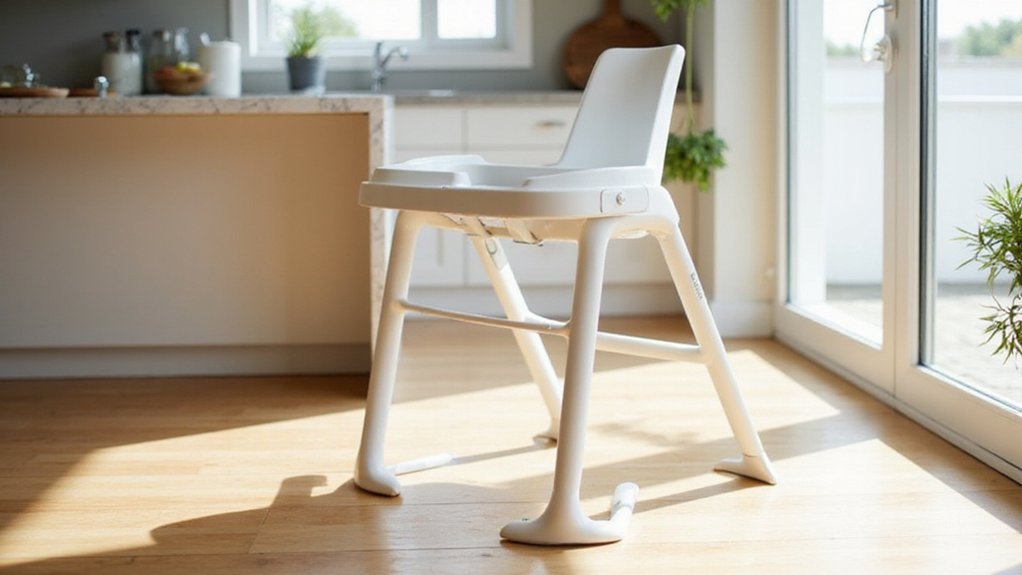
Struggling to fold your Cosco high chair? You’re not alone. Many find it tricky to collapse the chair without the tray in place or encountering jams.
By following a few simple steps—like removing the tray and properly releasing the latches—you can fold the chair smoothly and store it away easily.
Keep reading for the full guide to closing your high chair without fuss.
Remove the Tray Before You Fold the Cosco High Chair
Removing the tray before folding your Cosco high chair is essential for proper operation. Leaving it attached prevents the chair from folding correctly. To remove the tray, press both side release buttons at the same time to release it. Then, slide the tray forward until it separates from the armrests—avoid lifting straight up, as a gentle wiggle helps if it feels stuck. Applying controlled pressure is important to prevent damage to the side rails. For similar mechanisms, a common troubleshooting step is to check for debris in the release latch area, as found in the base removal guide. When selecting baby gear, a travel system can simplify outings by combining a car seat and stroller for smooth transitions. For a comfortable and secure fit, consider using soft, breathable cotton for any padded insert, similar to the material choices recommended for a DIY Moses basket liner.
This step also ensures the tray can be installed smoothly later and keeps the latch components free of debris, making maintenance easier. Once removed, position the tray toward the seat back for compact storage. Removing the tray enables the high chair to fold effortlessly and protects the mechanism from unnecessary stress.
Pull Both Side Latches and Hold Them
Locate both side latches on the high chair frame. These release triggers are on the outer side rails and are accessible from behind. Grasp each latch firmly with one hand and pull both upward at the same time. This upward pull is the key step to disengage the internal lock that keeps the chair upright. For a perfect fit during folding, ensure the latches fully release before attempting to collapse the chair. The process is similar to how Dr. Brown’s Bottle Warmer requires both proper latch release and steady pressure to function correctly. A quality unit like the best chest of drawers design ensures multiple compartments slide smoothly without jamming.
Keep holding both latches securely—don’t release them yet. Maintaining steady pressure allows the seat to start loosening as the lock disengages. You might need to use your thumbs to provide extra leverage, as pulling both latches can require some effort. This folding process involves unlocking sides and collapsing seat onto legs.
Hold the latches engaged until you feel the seat begin to release and shift downward. When the seat moves toward the legs, you can then let go of both latches. This simultaneous pull and hold ensure the seat loosens properly and completes the fold process without re-engaging the lock.
Guide the Seat Forward Until the Chair Collapses
To guide the seat forward until the chair collapses, gently push it while ensuring your hands are clear of pinch points near the side joints. The folding mechanism is designed to operate smoothly—avoid forcing it, as excessive pressure can damage the components. When the seat nearly aligns parallel to the base, the chair should then collapse fully on its own. You’ll hear a final snap as the internal lock engages in the leg supports, confirming that the collapse is complete. The folded assembly should stay compact without springing back open. If it resists, check your trigger release and the seat path; uneven movement indicates the release hasn’t fully engaged, preventing full collapse. Instead, you may need to locate and press the release points at the sides, which are often hidden and require careful inspection to avoid damaging the parts. For additional guidance, refer to proper cleaning techniques to keep the high chair hygienic after each use. A high-quality baby monitor can help you keep an eye on your child while they are near the closed high chair.
Store the Folded Chair Upright for Safe Travel
To store the folded chair upright for safe travel, position the fully collapsed frame on its base so it supports itself. Tuck it into a narrow corner to keep it vertical and prevent accidental reopening. Ensure the frame is tightly closed with no gaps between the seat and legs; a gentle wiggle test confirms it remains immobile. Confirm all locks are engaged before releasing it. A properly sized changing table height can prevent back strain when using the chair for infant care. For additional safety, verify that the storage space is free of any crib sheets or loose bedding that could pose a suffocation risk. For travel convenience, consider the best wearable breast pumps that offer hands-free pumping while managing toddler gear.
Secure the folded chair against shifting in your vehicle or carrier to avoid tipping. Its compact, upright profile helps fit into tight spaces, but you need a stable surface or hook rated for the weight to hold it securely. Remove any debris like toys, utensils, or food remnants, and store the tray with the chair if it was removed. Keep the chair in a clean, dry location away from sunlight and extreme temperatures to prevent deformation or rust during transit.
Troubleshooting: Fix a Stuck Latch Hook or Jammed Trigger
If the latch hook won’t release or the trigger feels jammed, start by checking the tray’s position. It must be slid to the first position toward the seat back before the chair can fold. Next, inspect the latch mechanism. The hook sits on the side and must wrap around the inner insert. Push the hook to the left and press the adjacent part down so it catches again. For trigger operation, pull both side latch-release triggers upward with noticeable force, using your fingers from the underside to get better leverage. If one trigger doesn’t move freely, check both sides for alignment. A stuck trigger often indicates misalignment rather than a broken part. Once the insert is correctly positioned behind the hook, the chair should open smoothly. Ease of storage is the main reason for purchase, making this folding fix essential for portability. Just as child safety depends on a secure harness and proper angle, this folding mechanism requires precise alignment for reliable operation. Following a similar process to converting a car seat can help ensure the mechanism engages correctly. Using a firm installation method prevents the latch from shifting during fold attempts.
Reopen the Chair and Listen for the Click
To properly reopen your chair, start by placing it on a flat, stable surface. Stand behind the chair and grasp the top of the seat back along with the front legs. Pull the seat back upward while simultaneously moving the front legs outward. Continue this motion until the chair is fully open and in an upright position. Ensure the chair is securely assembled before use, with the top locking into place automatically for stability. For added safety, consider using a Graco crib mattress that meets the same high standards of durability. Always check that the locking mechanism is fully engaged, similar to how you would verify a car seat installation. When selecting a travel system, Chicco often prioritizes safety testing that matches this level of rigor.
Listen closely for a distinct click sound. This lock sound indicates the locking mechanism has engaged, ensuring the chair is secure. Do not stop pulling until you hear that click. Partial opening may leave the lock disengaged, risking wobbling or instability. If the chair doesn’t click into place, check that the legs are fully spread and the seat back is fully upright. Once you hear the click, the chair is securely locked and ready for use without wobbling.
Attach the Tray Only After the Chair Locks Open
Attach the tray after the chair is fully open and locked into place with a clear, distinct click. This ensures the frame is secure and stable for tray installation. If the chair isn’t locked, you may encounter difficulties with alignment, and the tray won’t slide on smoothly.
First, open the chair completely until you hear the locking click. Then, align the tray with the armrests and slide it in until you hear another click. This confirms that the tray is locked securely in place. If you meet resistance, press the side handle buttons to lessen friction and help it slide on smoothly. Choosing a stroller rain cover can protect your folding equipment from moisture during outdoor use.
Never attach the tray before the chair is locked. Doing so risks compromising stability and safety, as the locking sequence stabilizes the frame and prevents wobbling. Only proceed with tray installation once both the chair and tray are fully engaged and locked into position. Consider the custom dresser’s weight capacity if you are also building a stable surface for baby care.
Avoid These 5 Common Folding Mistakes
You are making one of these five common folding mistakes if your attempts to fold the chair end in frustration. First, never hold the chair from just one side; it can spring open unexpectedly. Always control both sides as a single unit for a smooth fold. Second, pull both side release triggers at the same time; pulling one unevenly can block the lock and prevent proper folding. Third, check equipment compatibility by moving the tray to its first position or removing it before folding. Folding with the tray out can create resistance and make the process harder. Confirm the tray is fully retracted before folding to avoid damage. Fourth, guide the mechanism gently rather than forcing it—applying too much pressure can damage parts. Finally, fold from behind the chair while it is stable and upright. Folding it from an unstable position can twist the mechanism and increase the risk of pinching. Following these tips can help you fold the chair easily and avoid unnecessary frustration.
Keep the Tray Tracks and Latches Clean for Smooth Folding
Keep the tray tracks and latches clean to ensure smooth folding. Crumb-free tracks are essential; wipe the sliding rails after each meal to prevent food debris from blocking movement. For deeper cleaning, inspect the latch buttons and hidden crevices with a soft cloth dampened with warm, soapy water—avoid using abrasives. Fully squeeze the release levers to check for trapped food, as residue in these areas can make tray adjustments difficult. After cleaning, dry everything thoroughly to prevent moisture buildup, which can lead to rust or stickiness. Remember, Cosco chairs do not require lubrication, so avoid applying any. Focus instead on keeping the tracks dry and free of debris. Before folding the tray, slide it to the first position toward the seat back until it clicks into place. Regular, weekly cleaning combined with proper alignment helps reduce resistance during folding and ensures the latches function smoothly.