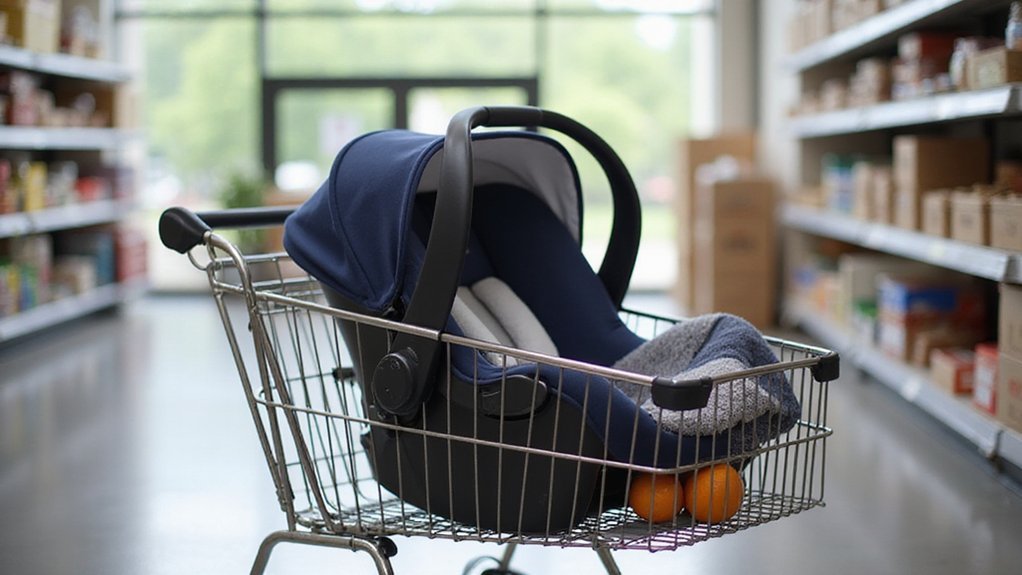
Wondering how to safely put an infant car seat in your shopping cart? It’s not as simple as just placing it inside—you need to do it correctly to keep your baby secure and prevent tipping.
In this guide, you’ll learn step-by-step how to position and secure the car seat inside the cart for stability and safety.
Keep reading to get your setup right.
Why the Basket Is the Only Safe Spot
Placing your infant car seat in the basket is the safest option because it keeps the seat low and fully contained, greatly reducing the risk of falls and tipping over. Grocery carts lack proper locking mechanisms for infant seats, so even a small bump or turn can dislodge the seat if placed on the top child seat or cart edge. The basket’s design ensures stability by holding the seat securely at a lower level, preventing it from toppling over or becoming unstable. However, for the most secure installation, you should consult best car seat cover reviews to ensure your car seat base is properly fitted in the vehicle. Elevating the seat makes the cart top-heavy, which increases the chance of a dangerous topple. Since grocery carts aren’t intended for infant seats, keeping the seat low, inside the basket, is the only safe choice. No other position provides the necessary stability to protect your child during shopping. For added safety, always ensure the chest of drawers in your home is anchored to prevent tipping hazards. Using a booster seat too early can also compromise safety, as proper weight and age requirements are critical for optimal restraint.
Check Your Cart and Seat for a Stable Fit
To ensure the seat fits securely in the cart, place it flat inside the main basket—not on the top child seat area. Check for minimal rocking; if the base tilts, reposition it until stable. Lower the handle against the floor to reduce movement, but make sure it doesn’t lift the seat. Verify that there is enough clearance so the seat doesn’t crowd the sides of the cart or cause the structure to strain. A tight fit that angles the seat upward indicates the cart isn’t suitable. Also, examine the seat padding since it can compress unevenly, creating a false sense of stability. After loading groceries, recheck the overall balance. Heavy items should not cause the entire load to tilt, as instability can lead to dangerous shifts during shopping. The Totes Babies carrier provides a hammock-style design that is simple to use—lay it over the shopping cart, place the car seat inside, and secure it with straps for a stable fit. Following the tips from refinishing a chest of drawers can help you select a cart with a sturdy, flat base that won’t flex under the seat’s weight.
Secure Your Baby in the Car Seat Before Moving
Always secure your baby in the car seat before moving. Place your baby’s back flat against the seat with their rear end fully seated. Thread the harness straps at or below the shoulders, then fasten the crotch buckle and chest clip. Tighten the harness until it is snug enough that you cannot pinch any slack at the shoulder—perform the pinch test to confirm proper snugness. Check for hidden looseness around the hips and torso. Finally, position the chest clip at armpit level to keep the harness centered across your baby’s upper body. Double-check that the clip didn’t shift during tightening. For extra safety when traveling, it is wise to choose a Uber-friendly infant car seat that is lightweight and easy to install without a base. These steps are essential to prevent injury, even during short trips. Remember that most infant car seats have a six-year total lifespan from the manufacture date, after which the plastic can degrade. For safe sleep, a standard crib mattress must also meet firmness and fit guidelines.
Adjust the Handle and Give It a Shake
After securing your baby, adjust the handle to the position specified in your manufacturer’s manual. Handle position rules differ by model, so always refer to your manual rather than guessing. Rotate the handle using the button-and-rotate mechanism until you hear a click. This click confirms the handle lock is engaged and the handle is securely in place. Ensuring that the harness straps are routed through matching slots on the padding and shell is crucial for proper fit in this rear-facing mode. For added security, look for a model with a sturdy base that prevents tipping, much like the stable design found in top-rated pack ‘n play bassinets. This rear-facing orientation is significantly safer because it protects the child’s head, neck, and spine during a crash.
Next, give the carrier a firm shake by pushing and pulling the handle. If it moves at all, the handle lock isn’t fully engaged. Reset the handle and try locking it again until it remains steady. A properly locked handle prevents accidental shifting while you’re shopping. Before moving on, check that the handle position doesn’t interfere with the carrier’s stability in the shopping cart. If the handle isn’t locked properly or impacts the carrier’s stability, do not use it until you resolve the issue.
Load Groceries Without Blocking the Infant Car Seat
To load groceries without blocking your infant car seat, keep the items low and segregated in the cart’s remaining basket space instead of placing them on top of the seat. This helps maintain clear visibility and prevents any accidental pressure on the seat. Use the lower area of the cart for bulky or non-fragile items, which allows you to keep the area around your baby open.
Load the heavier items first into the available basket, then fill gaps with lighter goods without pressing against the car seat. Always keep the infant oriented toward you, and avoid stacking products high enough to obstruct your line of sight. To organize effectively, place raw meat in the lower area away from the seat, and keep produce closer to you. If groceries do not fit safely, opt for a second shopping cart instead of forcing items into the space around the infant seat. For additional peace of mind, cleaning the cover as recommended for changing pad covers can help maintain a hygienic environment around your baby.
What to Do If the Seat Wobbles or Doesn’t Fit
If the infant car seat wobbles in the shopping cart, the first step is to reposition it so the base sits flat within the main basket, not on the top rail or child seat area. Lower the handle fully to brace it against the cart floor, which helps reduce rocking. Ensure the infant is fully buckled with a snug harness to prevent movement. If the seat still sways more than 1 to 2 inches, it means the cart isn’t secure enough, and you should stop using that cart. For car seat use in vehicles, always prioritize models with top safety ratings in crash tests. When selecting a stroller for newborns, focus on options that offer stable handling and a secure fit for the infant insert.
Check the seat’s compatibility with the cart by confirming that the carrier fits comfortably inside the basket. If possible, choose a cart with a larger basket for more space and stability. Never force the seat into a fit, as using supports or makeshift fixes can be unsafe. Remember, safe shopping cart use means never placing the seat above the basket level because it raises the center of gravity and makes tipping more likely. If the carrier is too large or unstable, consider switching to a stroller or opting for store pickup instead. Always keep the cart on level ground and avoid overloading. If the seat shifts or wobbles during use, treat this as a warning sign that the setup is insecure. A properly secured seat should feel solid and steady. For additional security, consider selecting a changing pad for newborn that includes a dedicated stabilizing base to prevent similar wobbling issues in other contexts.